The velvet curtain parts, soft lighting fills the room, and a chorus of voices calls out "Irasshaimase!" -- welcome. You are escorted to a plush booth, and within moments a beautifully dressed woman sits beside you, pours your whiskey with both hands, and asks about your day with genuine interest. This is the kyabakura experience -- Japan's iconic hostess club culture, and one of Tokyo's most fascinating nightlife traditions.
Quick Reference
- Price Range: ¥5,000–¥50,000+ per visit (~$35–$350+ USD)
- Duration: 60-minute sets with optional extensions
- Best Areas: Kabukicho (Shinjuku), Roppongi, Ginza, Ikebukuro
- Foreigner-Friendly: Limited -- Japanese conversational ability strongly recommended
- Japanese Required: Intermediate to advanced for full experience; basic at some Roppongi venues
- Payment: Cash or credit card (some clubs add 10-20% surcharge for card payments)
What Is a Hostess Club (Kyabakura)?
A hostess club -- known in Japanese as kyabakura (キャバクラ), short for "cabaret club" -- is a drinking establishment where male customers pay for the company and conversation of attractive female staff called hostesses (キャバ嬢, kyabajo). The hostess's job is to make you feel like the most important person in the room. She pours your drinks, lights your cigarettes, laughs at your jokes, listens to your problems, and maintains engaging conversation throughout your visit.
This is not a sexual service. Kyabakura are strictly social entertainment. The appeal lies in the attention, the ego boost, and the escape from everyday social dynamics. For many Japanese men, a favorite hostess becomes a confidante -- someone who provides emotional companionship without the complications of a real relationship. Regular customers develop long-term relationships with their hostesses, visiting weekly and spending significant amounts over months or years.
For foreign visitors, hostess clubs offer a window into a uniquely Japanese form of nightlife that has no direct equivalent in western culture. Understanding how they work -- the pricing, the etiquette, the social mechanics -- will help you decide if a visit is right for you.
How the Hostess Club System Works
The Set System (セット料金)
Hostess clubs operate on a "set" system. When you enter, you pay a set fee (セット料金, setto ryokin) that covers a fixed time period -- usually 60 minutes -- and includes one or two drinks for yourself. This is your base charge, and it is non-negotiable. Think of it as a cover charge plus your first round.
When your set time is nearly up, a staff member (called a "boy," typically a male floor manager) will approach and ask if you want to extend. Extensions (延長, encho) are sold in 30-minute increments at an additional fee. You are never forced to extend -- you can leave when your set ends.
The Drink System
Your set fee includes your own drinks, but here is where spending escalates: lady drinks (レディースドリンク). When a hostess sits with you, offering to buy her a drink is expected. This is a core revenue stream for the club, and hostesses are evaluated partly on how many drinks customers order for them. Lady drinks are typically cocktails or champagne priced at ¥1,000-2,000 each.
At high-end clubs, bottles of champagne or premium spirits can be ordered at dramatically marked-up prices. A ¥3,000 retail bottle of champagne might cost ¥30,000-100,000 at a top Ginza club. Ordering a bottle is a statement of wealth and generosity, and it will earn you significant attention from the hostesses and club staff.
The Nomination System (指名)
When you first visit a club, a hostess is assigned to you -- this is called "tsuke" (付け, assignment). If you return and request a specific hostess by name, that is a "shimei" (指名, nomination), and it carries a fee of ¥1,000-3,000 per visit. Building a relationship with a regular hostess is central to the kyabakura experience, and it benefits the hostess too -- her earnings and status within the club rise with her number of nominations.
Hostess Club Pricing in Tokyo
| Item | Budget Club | Mid-Range | High-End (Ginza) |
|---|---|---|---|
| Set Fee (60 min) | ¥3,000–¥5,000 | ¥5,000–¥8,000 | ¥10,000–¥20,000 |
| Extension (30 min) | ¥2,000–¥3,000 | ¥3,000–¥5,000 | ¥5,000–¥10,000 |
| Lady Drink | ¥800–¥1,000 | ¥1,000–¥2,000 | ¥2,000–¥5,000 |
| Nomination (Shimei) | ¥1,000 | ¥2,000–¥3,000 | ¥3,000–¥5,000 |
| Bottle (Champagne) | ¥10,000–¥20,000 | ¥20,000–¥50,000 | ¥50,000–¥500,000+ |
| Typical 2-Hour Visit | ¥8,000–¥15,000 | ¥15,000–¥30,000 | ¥30,000–¥100,000+ |
Best Hostess Club Areas in Tokyo
Kabukicho, Shinjuku
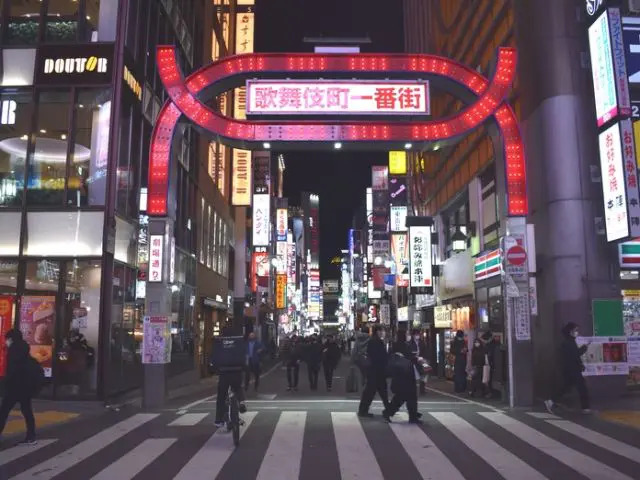
Kabukicho has the highest concentration of hostess clubs in Japan. Hundreds of clubs occupy the multi-story buildings along Kabukicho's main streets and side alleys, ranging from budget venues with ¥3,000 sets to mid-range clubs with well-known hostesses. The sheer volume means you have choices, but it also means more touts and more risk of stumbling into a disreputable venue.
Getting there: JR Shinjuku Station East Exit, walk 5 minutes north through the Kabukicho gate arch. Clubs are concentrated on the upper floors of buildings along the main Kabukicho street and Hanamichi-dori.
Kabukicho is your best bet for finding relatively foreigner-accepting clubs, though Japanese language ability will significantly improve your experience. For other entertainment options in the area, see our Tokyo adult entertainment overview.
Roppongi
Roppongi's hostess clubs cater more to an international clientele, including expats, business travelers, and tourists. Some clubs here employ hostesses who speak English, Chinese, or Korean, making this area the most accessible for non-Japanese speakers. Prices are generally higher than Kabukicho, with set fees starting around ¥6,000-10,000.
Getting there: Tokyo Metro Hibiya Line or Toei Oedo Line, Roppongi Station Exit 3. Clubs are concentrated along Roppongi-dori and the side streets near the Roppongi crossing.
Ginza
Ginza is the pinnacle of hostess club culture. These are ultra-high-end establishments where set fees start at ¥15,000, bottles of Dom Perignon flow freely, and the hostesses are polished professionals who may be minor celebrities. Ginza clubs cater primarily to Japanese executives and politicians with corporate entertainment budgets. As a foreigner, you would need strong Japanese, a Japanese companion to introduce you, or an extremely thick wallet.
Getting there: Tokyo Metro Ginza Line, Ginza Station Exit A5. Clubs are spread along the side streets between Namiki-dori and Chuo-dori, typically on upper floors above luxury retail.
Ikebukuro
Ikebukuro offers more accessible and affordable kyabakura compared to the other major districts. The entertainment area around West Exit has clubs with set fees as low as ¥3,000 and a generally welcoming attitude toward newcomers. This is a solid starting point if you want to try the hostess club experience without the intimidation factor of Ginza or the chaos of Kabukicho.
Getting there: JR Ikebukuro Station West Exit, walk 5 minutes into the entertainment streets. Check our Ikebukuro entertainment guide for specific recommendations.
Hostess Club Etiquette: The Unwritten Rules
Hostess clubs have a refined social code. Following these rules will ensure a smooth and enjoyable experience:
Buy her drinks. When a hostess sits with you, offering her a drink is the baseline expectation. This is how the business works. You do not need to order expensive bottles, but refusing to buy any lady drinks will result in less attentive service.
Be conversational and engaged. The hostess is there to talk with you. Ask questions, share stories, be genuinely interested. Sitting silently on your phone defeats the purpose and is considered rude.
Do not touch inappropriately. Light, incidental contact (a touch on the arm, a clink of glasses) is normal. Grabbing, groping, or aggressive physical contact is absolutely not acceptable and will get you removed from the club immediately.
Do not ask for the hostess's personal contact information on your first visit. Building that level of trust takes multiple visits. Some hostesses will offer their LINE or Instagram after you become a regular, but pushing for it on night one is seen as pushy and disrespectful.
Do not haggle over prices. The prices are the prices. If you cannot afford the club, politely leave after your first set. Attempting to negotiate is deeply disrespectful in Japanese nightlife culture.
Tip is not expected. Japan does not have a tipping culture, and hostess clubs are no exception. Your set fees, drinks, and nominations are your total cost (plus tax and any service charge already included in the bill).
Understanding "Douhan" and "After"
Two concepts central to the kyabakura world are douhan (同伴) and after (アフター).
Douhan is a pre-arranged dinner date with a hostess before her shift. You take her to a restaurant, pay for the meal, and then accompany her to the club where you continue as a customer. The hostess benefits because douhan counts as a "same-day nomination" on her performance metrics, and she gets a free dinner. You benefit from extra time with her and a guaranteed nomination. Douhan typically adds ¥5,000-10,000 to your evening costs (the restaurant meal) plus the standard club fees.
After is when a hostess agrees to spend time with a customer after her shift ends, usually around 1-3 AM. This might involve going to a bar, a late-night restaurant, or simply walking and talking. After is entirely the hostess's choice and is not a service you can demand or purchase. It happens only when a hostess genuinely likes a customer or is strategically building a relationship with a high spender.
Hostess Clubs vs. Other Nightlife Options
If the hostess club format sounds interesting but the Japanese language requirement or price tag is a concern, consider these alternatives:
Girls bars offer a more casual, affordable version of the hostess experience. Female bartenders chat with you across a counter, drinks flow, and the atmosphere is relaxed. Set fees are ¥3,000-5,000 per hour including your own drinks, and many girls bars are foreigner-friendly. This is an excellent starting point for newcomers.
For hands-on adult entertainment rather than social drinking, Tokyo offers a wide range of fuzoku services from pink salons to delivery health. These serve a completely different purpose than hostess clubs -- they are adult services rather than social entertainment.
Check our venue directory for specific hostess club and girls bar listings with foreigner-friendly ratings.
Is a Hostess Club Worth Visiting?
That depends entirely on what you are looking for. If you enjoy conversation, appreciate attentive service, and want to experience a uniquely Japanese social ritual, even one visit to a kyabakura is a memorable window into Japanese nightlife culture. The atmosphere, the formality, the codified social dynamics -- nothing else in the world is quite like it.
If your Japanese is limited, start with a girls bar or a Roppongi club with English-speaking hostesses. If you speak conversational Japanese, mid-range Kabukicho or Ikebukuro clubs offer excellent value and a genuine kyabakura experience without the extreme costs of Ginza.
Either way, set a firm budget before you walk in, track your lady drinks and extensions, and enjoy one of Tokyo's most iconic nightlife traditions.