
Tokyo is one of the best cities in the world for solo travel. It is extraordinarily safe, easy to navigate, and filled with experiences that are perfectly suited to independent exploration. Whether you are visiting for the first time or returning to dig deeper into the city's neighborhoods, traveling alone in Tokyo gives you the freedom to move at your own pace and discover places that group travelers often miss.
Quick Reference
- Daily Budget: ¥8,000 – ¥25,000 depending on style
- Best Areas to Stay: Shinjuku, Shibuya, Ikebukuro, Asakusa
- Accommodation: ¥2,500 (hostel) – ¥8,000 (business hotel) per night
- Japanese Required: None for navigation; basic phrases help with dining and socializing
- Safety Rating: Very High -- one of the safest major cities worldwide
This guide covers the essential neighborhoods, budget accommodation, dining alone, nightlife, safety, and day trips -- everything a solo traveler needs to make the most of Tokyo.
Best Neighborhoods for Solo Travelers
Tokyo is a city of distinct neighborhoods, each with its own character. Where you base yourself matters, especially when you are on your own and want easy access to food, transport, and things to do after dark.
Shinjuku
Shinjuku is the single best base for most solo travelers. It is Tokyo's largest transport hub, with JR lines, metro lines, and highway buses all converging at Shinjuku Station. From here you can reach virtually any part of the city within 30 minutes.
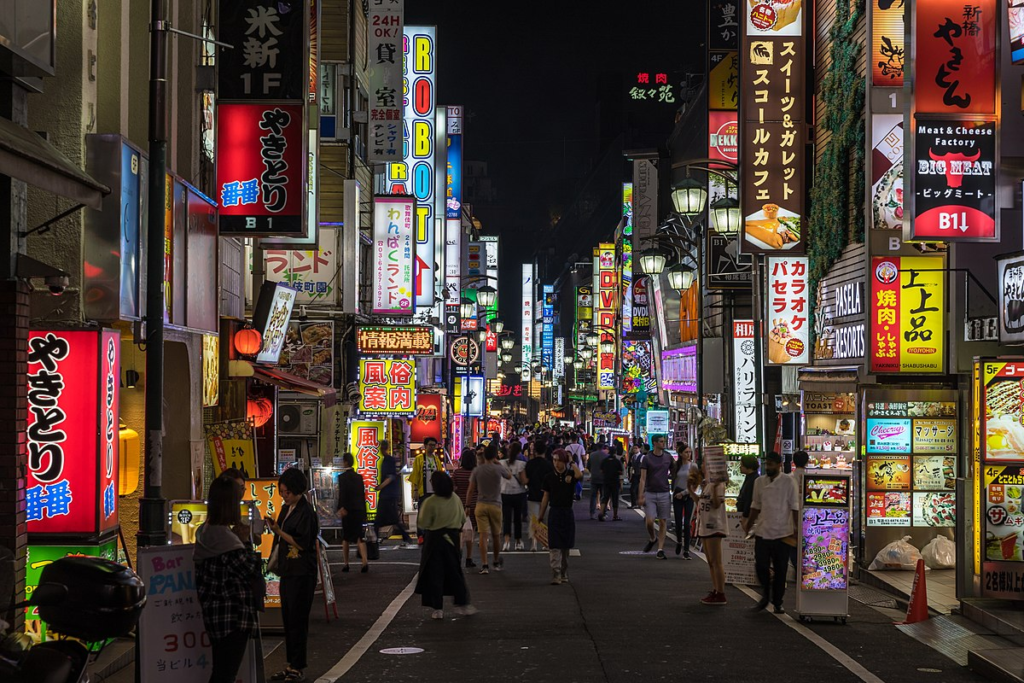
The west side has the Tokyo Metropolitan Government Building, where you can get free panoramic views of the city from the 45th floor observation deck. The east side is where things get lively -- Kabukicho is Tokyo's most famous entertainment district, packed with restaurants, bars, karaoke boxes, and adult entertainment venues. Golden Gai, a cluster of over 200 tiny bars crammed into six narrow alleys, is one of the best solo nightlife experiences in the world. For more on what the entertainment districts offer, see our guide to Japan's adult entertainment scene.
Shibuya
Shibuya skews younger and trendier. The famous Shibuya Crossing is here, along with endless shopping, cafes, and a thriving bar scene. Center-gai and the surrounding streets have everything from craft beer spots to late-night izakayas. Shibuya is also well connected by train, making it a solid alternative base if Shinjuku feels too intense.
Ikebukuro
Ikebukuro is more affordable than Shinjuku or Shibuya and offers a surprisingly good range of entertainment. The west exit area has a growing nightlife scene with foreigner-friendly bars and restaurants. Sunshine City is a massive entertainment complex with an aquarium, planetarium, and shopping. Hotel prices here tend to be 20-30% lower than Shinjuku for comparable quality, which makes a real difference on a longer solo trip.
Asakusa
Asakusa is Tokyo's most traditional neighborhood and a strong choice for budget-conscious solo travelers. Senso-ji temple, Tokyo's oldest, is the main draw. The surrounding streets are full of affordable restaurants, street food vendors, and old-school ryokan-style guesthouses. Asakusa is quieter at night compared to Shinjuku, but it offers a more grounded, cultural experience. The Sumida River area is excellent for evening walks.
Akihabara
If anime, gaming, electronics, or manga are part of your trip, Akihabara is the obvious destination. Multi-story arcades, retro game shops, figure stores, and maid cafes fill the neighborhood. Solo travelers can easily spend an entire day browsing here. It is also on the Yamanote line, so getting to other parts of the city is simple.
Roppongi
Roppongi has the most international atmosphere of any Tokyo neighborhood. It is popular with expats and foreign visitors, which means English is more widely spoken in bars and restaurants here than almost anywhere else in the city. The nightclub scene is active, and the Roppongi Hills and Tokyo Midtown complexes have high-end dining and the Mori Art Museum. Be aware that Roppongi also has a higher concentration of touts than most areas -- exercise normal caution.
Budget Accommodation for Solo Travelers
Tokyo has a wide range of accommodation options specifically suited to solo travelers. You do not need to spend a fortune to sleep well and stay in a convenient location.
| Accommodation Type | Price Range | Duration | Notes |
|---|---|---|---|
| Hostel dorm | ¥2,500-4,000 | Per night | Social atmosphere, common areas |
| Capsule hotel | ¥3,000-4,000 | Per night | Private pod, shared facilities |
| Manga cafe | ¥1,500-2,500 | Overnight | Emergency option, reclining booth |
| Business hotel | ¥5,000-8,000 | Per night | Private room with bathroom |
| Love hotel (solo) | ¥4,000-8,000 | Rest/Stay | Larger rooms, automated check-in |
Capsule Hotels (¥3,000-4,000/night)
Capsule hotels are a uniquely Japanese experience and one of the most practical options for solo travelers. Each guest gets a private sleeping pod with a light, power outlet, and sometimes a small TV. Shared bathrooms and locker areas are standard. Modern capsule hotels like Nine Hours and First Cabin have elevated the concept significantly, with clean minimalist design and good locations near major stations. Most capsule hotels are gender-segregated by floor.
Hostels (¥2,500-4,000/night)
Tokyo's hostel scene is excellent. Places like Nui in Kuramae, Toco in Iriya, and Khaosan chain hostels offer clean dorm beds, common areas where you can meet other travelers, and often free events like pub crawls or walking tours. If you want a social element to your solo trip, hostels are the best option. Many also offer private rooms for a bit more.
Manga Cafes and Internet Cafes (¥1,500-2,500 overnight)
Manga cafes (manga kissa) like Manboo and Popeye are a legitimate budget accommodation option. You get a private or semi-private booth with a reclining seat or flat mat, unlimited drinks from a drink bar, access to thousands of manga volumes, internet, and sometimes showers. They are open 24 hours and charge by the hour or offer overnight packages. While not as comfortable as a proper bed, they are a reliable fallback, especially if you miss the last train.
Business Hotels (¥5,000-8,000/night)
Japanese business hotels are small, functional, and clean. Chains like Toyoko Inn, APA Hotel, and Dormy Inn offer single rooms that are compact but private, with their own bathroom, TV, and often a complimentary breakfast. Dormy Inn locations frequently have an onsen (hot spring bath) on-site, which is a major bonus after a long day of walking.
Love Hotels for Solo Use (¥4,000-8,000 rest/stay)
Love hotels are designed for couples, but many accept solo guests, particularly for "stay" rates (overnight). The rooms are often larger and more comfortable than business hotel rooms at a similar price, with large baths, big beds, and entertainment systems. Shibuya's Dogenzaka (Love Hotel Hill) and Kabukicho both have high concentrations. Check-in is usually automated, so there is no awkward front desk interaction.
Solo Dining Guide
Eating alone in Tokyo is completely normal. There is zero stigma attached to it, and the city is designed to accommodate solo diners. In fact, many of Tokyo's best food experiences are optimized for one person.
Ramen Shops
Ramen is the quintessential solo meal in Tokyo. Most ramen shops have counter seating facing the kitchen, and the experience is designed to be quick and focused. You order from a vending machine (shokkenki), hand your ticket to the cook, and eat. Ichiran takes it a step further with individual partitioned booths where you cannot even see the person next to you. A bowl of ramen costs ¥800-1,200 at most shops.
Gyudon Chains
Yoshinoya, Matsuya, and Sukiya are the big three gyudon (beef bowl) chains, and they are everywhere. A standard beef bowl costs ¥400-600, making these some of the cheapest sit-down meals in the city. Order at the counter or from a ticket machine, eat quickly, and go. These chains are open 24 hours, which makes them invaluable for late-night hunger.
Conveyor Belt Sushi (Kaiten-zushi)
Conveyor belt sushi restaurants like Sushiro, Kura Sushi, and Hamazushi offer good-quality sushi at ¥100-200 per plate. You sit at the counter, grab plates as they pass, or order specific items on a tablet. It is an easy, stress-free solo dining experience with no Japanese language skills required -- the tablets usually have English options.
Izakayas with Counter Seating
Many izakayas (Japanese pubs) have counter seats where solo diners are welcome. Chains like Torikizoku, Uotami, and Watami are approachable, but smaller independent izakayas often have better food and a more authentic atmosphere. Sitting at the counter sometimes leads to conversation with the staff or other regulars, which can be a highlight of solo travel in Japan.
Convenience Store Meals
Do not underestimate Japanese convenience stores. 7-Eleven, Lawson, and FamilyMart stock surprisingly high-quality onigiri (rice balls, ¥120-180), bento boxes (¥400-600), sandwiches, salads, and hot foods like fried chicken and nikuman (steamed buns). Many stores have a small eating area. For a budget solo traveler, convenience store meals can easily cover one or two meals a day without sacrificing quality.
Standing Bars (Tachinomi)
Tachinomi are standing-only bars where drinks and small dishes are cheap. Beer starts at ¥200-300, and food items are typically ¥100-400. The standing format encourages casual conversation, and the low prices mean you can sample several places in one evening. They are scattered throughout most major neighborhoods, often near train stations.
Nightlife for Solo Travelers
Tokyo's nightlife is vast and varied, and much of it is perfectly suited to solo exploration. You do not need a group to have a great night out.
Golden Gai (Shinjuku)
Golden Gai is possibly the best solo nightlife destination in the world. Over 200 tiny bars, most seating only 6-10 people, are packed into six narrow alleys. The small size means you will end up talking to whoever is sitting next to you -- bartenders, locals, and other travelers. Some bars have cover charges (¥500-1,000), and some are foreigner-friendly while others are regulars-only. Look for signs in English or ask before entering. Budget ¥3,000-5,000 for a good evening here.
Hub Chain Pubs
Hub is a British-style pub chain found in most major Tokyo neighborhoods. It attracts a mixed crowd of Japanese people and foreigners, making it one of the easiest places to strike up conversations in English. Drinks are reasonably priced (¥500-700 for beer), and the atmosphere is relaxed and social. If you want to meet people, Hub is a reliable starting point. For more detailed strategies on meeting people while out, check our guide to meeting girls in Japan.
Karaoke
Solo karaoke (hitokara) is a legitimate and popular activity in Japan. Chains like Manekineko, Big Echo, and Joysound offer solo rates, and some locations even have dedicated single-person rooms. Rates run ¥1,500-3,000 for a few hours with an all-you-can-drink option. Late-night karaoke packages that run until 5 AM are also a practical way to wait out the gap between the last train and the first morning train.
Entertainment Districts
Kabukicho in Shinjuku and the area around Ikebukuro's west exit are the main entertainment districts that solo male travelers tend to explore. These areas have a wide range of establishments from standard bars to adult entertainment venues. If you are curious about the social scene, aisekiya bars are match-making style izakayas where solo visitors are seated with other groups -- an interesting experience even if you are just looking for conversation.
Safety Tips for Solo Travelers
Tokyo is one of the safest major cities on the planet. Violent crime targeting tourists is extremely rare, and you can walk through most neighborhoods at any hour without concern. That said, common sense still applies.
Avoid Touts
In Kabukicho and Roppongi, touts (known as "catch" in Japanese) approach foreigners on the street to lure them into bars and clubs. These establishments often have inflated prices, hidden charges, or aggressive upselling. The simple rule is: never follow a tout. If someone approaches you on the street with an offer, decline and keep walking. The best venues do not need street promoters.
Last Train Timing
Most train and metro lines stop running between midnight and 12:30 AM, with first trains resuming around 5 AM. Plan your evening around this schedule, or be prepared to stay out until morning. The Yamanote line (the main loop line) runs its last train around 12:30 AM from most stations. Check the specific last train time for your route using Google Maps or the Navitime app.
Emergency Numbers and Resources
Police: 110. Ambulance/Fire: 119. The Japan Helpline (0570-000-911) offers 24/7 English-language assistance. Most police boxes (koban) are staffed around the clock and officers will assist with directions or emergencies, though English ability varies. Your country's embassy in Tokyo can also help in serious situations.
Lost Property System
Japan's lost property system is remarkably effective. If you lose something on a train, report it to the station's lost and found office. Items left on JR trains go to the JR East Lost Property Office in Tokyo Station after a day or two. Items left on metro lines go to the respective metro company's lost property center. Wallets, phones, and bags are routinely returned with contents intact. File a report as soon as possible.
Staying Connected
A reliable internet connection is essential for solo travelers navigating Tokyo. Pocket WiFi rental (¥500-1,000/day) gives you a portable hotspot. Prepaid data SIM cards from companies like IIJmio, Mobal, or b-mobile cost ¥2,000-4,000 for 7-30 days of data. You can buy SIM cards at the airport or major electronics stores. Free WiFi is available at most convenience stores, train stations, and Starbucks locations, but having your own connection is far more convenient.
Day Trips from Tokyo
After several days in the city, a change of scenery helps. Tokyo's location makes it easy to reach mountains, coastline, and historic towns within a couple of hours. All of these day trips are straightforward for solo travelers.
Hakone (90 minutes from Shinjuku)
Hakone is the classic Tokyo day trip. Take the Odakyu Romance Car from Shinjuku Station directly to Hakone-Yumoto. From there, the Hakone Free Pass (¥6,100 round trip from Shinjuku) gives you unlimited use of buses, cable cars, a pirate ship on Lake Ashi, and the Hakone Tozan Railway. Hakone is famous for its hot springs (onsen), and several day-use facilities welcome solo visitors. On a clear day, you get views of Mount Fuji from the ropeway.
Kamakura (60 minutes from Tokyo Station)
Kamakura was Japan's capital in the 13th century and is home to the Great Buddha (Kotoku-in), one of Japan's most iconic images. Take the JR Yokosuka line from Tokyo Station. Beyond the Great Buddha, explore Hase-dera temple, the bamboo groves of Hokoku-ji, and the hiking trails that connect several shrines through the surrounding hills. The Enoshima area nearby has beaches and a small island with a shrine and sea caves.
Nikko (2 hours from Asakusa)
Nikko is home to Toshogu Shrine, one of the most ornate and lavishly decorated shrines in Japan and a UNESCO World Heritage site. Take the Tobu line from Asakusa Station. The shrine complex alone takes 2-3 hours to explore properly. If you have time, Kegon Falls and Lake Chuzenji are worth the additional bus ride. Nikko is less crowded on weekdays and especially rewarding in autumn when the leaves change.
Yokohama (30 minutes from Shibuya)
Yokohama is technically a separate city but feels like an extension of Tokyo. Chinatown is the largest in Japan, with hundreds of restaurants. The Minato Mirai waterfront area has the Cup Noodles Museum, Landmark Tower observation deck, and a pleasant boardwalk. Yokohama is an easy half-day trip and can be combined with an evening in nearby Kawasaki if you want to explore more entertainment options.
Practical Tips for Getting Around
Tokyo's train system looks intimidating on a map but is actually straightforward once you understand the basics. Buy a Suica or Pasmo IC card at any station -- these rechargeable cards work on all trains, buses, and even convenience stores and vending machines. A single train ride within central Tokyo costs ¥170-320 depending on distance.
Google Maps is the best tool for navigating Tokyo's trains. It shows real-time departure times, platform numbers, transfer instructions, and walking directions between stations. Download offline maps before your trip as a backup.
Walking is also a major part of getting around Tokyo. Many neighborhoods are best explored on foot, and distances between attractions within a district are often shorter than they appear on the map. Comfortable shoes are essential -- you will walk 15,000-25,000 steps on a typical day of sightseeing.
Essential Japanese Phrases for Solo Travelers
Final Thoughts
Tokyo is one of the most rewarding cities in the world for solo travel. The combination of safety, efficient transport, solo-friendly dining, and an enormous range of things to do means you will never feel limited by traveling alone. If anything, being solo gives you more flexibility to follow your interests, whether that means spending a full day in Akihabara, bar-hopping through Golden Gai until dawn, or taking a spontaneous day trip to Hakone.
The key is to base yourself in a well-connected neighborhood, stay flexible with your schedule, and embrace the fact that Tokyo is a city built for people who do things on their own terms. Solo travel here is not just manageable -- it is the ideal way to experience the city.