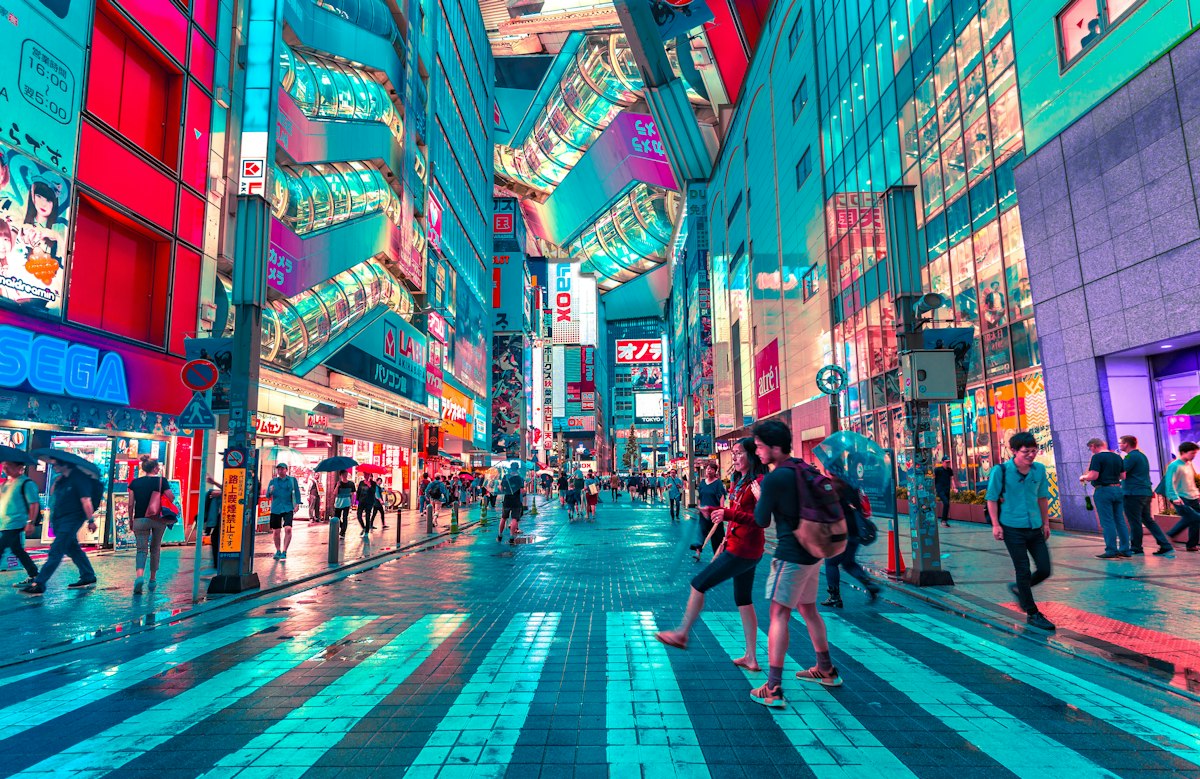
Cultural Landscape
Tokyo's adult entertainment scene is more than just bright lights and late-night escapades--it's a cultural phenomenon with deep roots. This isn't your typical night out. It's a unique blend of old traditions and modern desires, a world that buzzes with life when the rest of the city winds down.
The adult entertainment scene here isn't just accepted--it's integrated into everyday life in ways that might surprise you. From the vibrant host and hostess clubs, where business deals are made over drinks, to the secretive love hotels that provide a private escape from the city's hustle and bustle, Tokyo's adult scene is diverse and complex. For a broader look at the full range of options available, see our overview of Japan's adult entertainment landscape.
The neon lights are just the start. They're the gateway to a world that's full of surprises and offers an eye-opening perspective on Japan's approach to adult entertainment. Among the many types of establishments operating in Tokyo's red-light districts, the pink salon--or pinsaro--stands out as one of the most accessible and affordable entry points into Japan's fuzoku (adult service) industry. This guide covers everything you need to know about pink salons: what they are, how they work, their history, and what foreign visitors should expect.
Quick Reference
- Price Range: ¥3,000 – ¥6,000 (standard session)
- Best Areas: Kabukicho, Ikebukuro, Gotanda, Ueno
- Foreigner-Friendly: Varies -- Ikebukuro most welcoming
- Japanese Required: Minimal; pointing at menus works at reception
- Duration: 20-40 minutes typical
What Is a Pink Salon?
A pink salon, known in Japanese as pinku saron (ピンクサロン) or more commonly abbreviated to pinsaro (ピンサロ), is a type of adult entertainment venue where customers receive oral services from female staff in a communal, dimly lit setting. The name "pink salon" is believed to derive from the soft pink lighting used inside these establishments, which creates a dark, semi-private atmosphere while still being technically open-plan.
Unlike private-room services such as soaplands or delivery health, a pink salon typically operates with a large open room where multiple customers are seated simultaneously. The seating arrangement varies--some shops use individual booths separated by low partitions, while others have rows of theater-style seats or small sofas. The room is kept dark enough that customers cannot easily see one another, creating a sense of privacy despite the shared space.
Sessions operate on a rotation system. After paying at the front counter, a customer is led to a seat. A staff member will come to their seat, and the session begins. In many shops, especially those with shorter time limits, multiple staff members may rotate through during a single session, spending a few minutes each before moving to the next customer. Longer time slots sometimes allow for a single staff member to stay for the entire duration.
How Pink Salons Differ from Other Fuzoku
Japan's fuzoku industry is surprisingly segmented, with each category of establishment offering a distinct type of service, price point, and experience. Here is how pink salons fit into the broader landscape:
Soaplands are full-service bathhouse-style venues where the customer is bathed and massaged by an attendant in a private room. They are the most expensive fuzoku option, often running ¥20,000-¥60,000 or more per session. Soaplands are heavily regulated and many refuse foreign customers outright.
Delivery health (deriheru) sends staff to a customer's hotel room or residence. Services typically include everything except full intercourse, though practices vary widely. Prices range from ¥15,000-¥30,000 for a standard session. Some delivery health services are foreigner-friendly, especially those operating near major hotels.
Fashion health (fasshon herusu) establishments offer hands-on services in private rooms at a physical shop location. They occupy a middle ground between the affordability of pink salons and the privacy of soaplands, usually costing ¥10,000-¥20,000 per session.
Pink salons sit at the budget end of this spectrum. With prices typically between ¥3,000 and ¥6,000 and session times of 20-40 minutes, they are the most affordable fuzoku option. The trade-off is the lack of privacy and the limited scope of services. For a more detailed breakdown, check out our comprehensive pink salon guide.
History and Origins
Pink salons emerged during Japan's rapid economic growth period of the late 1960s and 1970s. As the Japanese economy boomed and disposable income surged, the adult entertainment industry expanded and diversified to meet growing demand. The earliest pink salons appeared in Tokyo's entertainment districts--particularly in Kabukicho and Ikebukuro--as a lower-cost alternative to the already well-established soaplands (then called toruko buro, or "Turkish baths," before the name was changed in the 1980s following diplomatic complaints from Turkey).
The appeal of pink salons was straightforward: they provided adult services at a price point that salarymen could afford on a regular basis, not just as an occasional splurge. The open-room, rotation-based model kept overhead low. No private rooms to maintain, minimal furnishings, and a high customer throughput per hour meant that shops could charge a fraction of what soaplands demanded while still turning a profit.
Through the 1980s and into the bubble economy era, pink salons proliferated across Tokyo and other major cities. They became a fixture of red-light districts, often recognizable by their discreet signage and narrow staircase entrances leading to upstairs floors. Many operated in buildings alongside other nightlife businesses--snack bars, karaoke joints, and izakaya.
Regulation Under the Fueiho
Japan's adult entertainment industry is governed primarily by the Fueiho (風営法), formally known as the Act on Control and Improvement of Amusement Business. This law, originally enacted in 1948 and revised multiple times since, regulates all "entertainment businesses" in Japan, from pachinko parlors and nightclubs to fuzoku establishments.
Pink salons fall under the fuzoku category of the Fueiho. They are required to register with local public safety commissions, maintain certain operating standards, and adhere to zoning restrictions that confine them to designated entertainment districts. The law also sets limits on operating hours and prohibits the employment of minors.
The legal framework around pink salons is often described as a gray area. Japan's Anti-Prostitution Law of 1956 defines prostitution narrowly as vaginal intercourse for payment. Because pink salons provide oral services rather than intercourse, they technically fall outside this definition. This legal distinction--rather than any explicit legalization of the services themselves--is what allows pink salons to operate. It's a nuance that surprises many foreigners who assume all commercial sexual services must be either fully legal or fully illegal.
Over the decades, periodic crackdowns by local police have shut down establishments operating outside the rules--particularly those suspected of offering undisclosed full services, employing undocumented workers, or failing to register properly. The industry has contracted somewhat since its peak in the 1980s and 1990s, but pink salons remain a visible part of Tokyo's entertainment districts today.
What to Expect as a First-Time Visitor
Walking into a pink salon for the first time can be disorienting if you don't know the process. Here is a step-by-step overview of how a typical visit works.
Step 1: Finding the Entrance
Pink salons are rarely located at street level. Most are on the second floor or higher of multi-tenant buildings in entertainment districts. The signage outside is usually small and discreet--sometimes just a lit sign with the shop name and "ピンサロ" or a price list. Touts (客引き, kyakuhiki) standing outside nearby may try to direct you to specific shops, though following touts is generally not recommended as they often steer customers toward shops that pay them commission rather than the best-value options.
Step 2: Paying at the Counter
Once inside, you will be greeted at a reception counter. This is where you choose your time slot and pay upfront. Most shops offer a basic session (20-30 minutes) and an extended session (30-40 minutes). The counter staff will explain the pricing, though this is almost always conducted in Japanese. A printed menu with prices is usually displayed. Payment is cash only--no credit cards, no electronic payments. Have the exact amount or close to it ready.
Step 3: Being Seated
After paying, a staff member will lead you through a curtain or doorway into the main room. Your eyes will need a moment to adjust to the darkness. You'll be guided to your seat--a chair, booth, or sofa depending on the shop's layout. In some shops you'll be offered a drink (alcoholic or soft drink) included in the price; in others, drinks are an extra charge.
Step 4: The Session
A female staff member will come to your seat and the session begins. In rotation-style shops, she will stay for a set number of minutes before moving on, and another staff member will take her place. In non-rotation shops or with extended time purchases, you may have the same person for the full session. There is minimal conversation in most cases, though some staff will make small talk.
Step 5: Finishing Up
When your time is up, the lights in your area may flash briefly or a staff member will quietly let you know. You clean up with the provided tissues or hot towel, gather your belongings, and leave through the same entrance. There is no expectation to tip, though leaving a small tip (¥1,000) is appreciated in some establishments. The entire process is designed to be quick, quiet, and efficient.
Reviews and Videos From the Public
This Japanese YouTuber spent just 100 bucks for a whirlwind tour of Tokyo's notorious Pink Salons, hitting up not one, but five spots in a single hour. This isn't just a sneak peek--it's a deep dive into one of the city's most colorful corners. If you've ever wondered what really goes down in Tokyo after dark, you won't want to miss this. Hit the play button, kick back, and get ready to see Tokyo's nightlife in a whole new light. Trust me, it's an eye-opener.
https://japanesesexservice.com/english.html
This is a more NSFW version of what is actually happening inside of the pink salon.
This one does a better job at explaining the ins and outs of the place.
Pink Salons vs Other Fuzoku Services
To make the distinctions between the major fuzoku categories clearer, here is a side-by-side comparison of the key factors that matter most to visitors.
| Category | Price Range | Session Length | Service Type | Foreigner Access | Booking Required |
|---|---|---|---|---|---|
| Pink Salon | ¥3,000-¥6,000 | 20-40 min | Oral service (open room) | Some shops accept | No (walk-in) |
| Soapland | ¥20,000-¥60,000+ | 60-120 min | Full service (private room/bath) | Very limited | Recommended |
| Delivery Health | ¥15,000-¥30,000 | 60-90 min | Non-penetrative (customer's location) | Some services cater to foreigners | Yes (phone/web) |
| Fashion Health | ¥10,000-¥20,000 | 40-60 min | Non-penetrative (private room at shop) | Limited | Recommended |
As the table shows, pink salons are by far the cheapest and most casual option. They require no reservation, no phone call, and no Japanese language ability beyond pointing at a price on a menu board. The downside is the shared environment and short session times. If privacy matters to you, fashion health or delivery health are better options, though at significantly higher cost. For a full exploration of how each district's pink salon scene compares, see our district-by-district Tokyo pink salon guide.
Tips for Foreign Visitors
Visiting a pink salon as a foreigner in Tokyo comes with some unique challenges. Here is practical advice based on common questions and experiences.
Language Barriers
Most pink salon staff speak little to no English. The reception counter interaction is the most language-dependent part of the visit, and even that is usually manageable with gestures and pointing. Some shops display a bilingual price list; many do not. Having a translation app ready on your phone can help for basic communication, but keep in mind that many shops ask you to put your phone away once inside the main room.
If you have a Japanese-speaking friend willing to help you get through the door, that eliminates the biggest barrier. Once seated, the experience itself requires almost no verbal communication.
Useful Japanese Phrases
A handful of basic phrases will go a long way:
- いくらですか? (Ikura desu ka?) -- "How much is it?"
- 基本コース (Kihon koosu) -- "Basic course" (the standard/cheapest option)
- 延長 (Enchou) -- "Extension" (to add time)
- お願いします (Onegai shimasu) -- "Please" (general polite request)
- ありがとうございます (Arigatou gozaimasu) -- "Thank you"
- 外国人OK? (Gaikokujin OK?) -- "Are foreigners OK?" (ask this at the door)
Foreigner-Friendly Areas
Not all pink salons accept foreign customers. Some turn away non-Japanese visitors at the door, usually citing language issues or house policy. However, certain areas in Tokyo are known to be more accommodating:
Ikebukuro has one of the highest concentrations of foreigner-friendly pink salons in Tokyo. The area around the north exit of Ikebukuro Station, particularly along the streets leading toward Sunshine City, has several establishments that routinely accept non-Japanese customers. For specific area recommendations, see our Ikebukuro pink salon guide.
Kabukicho in Shinjuku is Tokyo's largest red-light district and has a wide variety of shops. Foreigner acceptance is mixed here--some cater to international visitors, others don't--but the sheer number of options means you're likely to find one that will let you in.
Gotanda and Ueno also have pink salon clusters, though these areas tend to be less foreigner-friendly than Ikebukuro.
What to Bring
- Cash. This is non-negotiable. Pink salons are cash-only businesses. Bring enough yen to cover the session cost plus a buffer. ATMs in convenience stores (7-Eleven, FamilyMart, Lawson) accept most international cards and are available 24/7.
- ID. You won't always be asked, but having your passport or residence card on hand is wise. Some shops may ask for identification, particularly if they're unsure whether you meet the minimum age requirement (18 years old).
- A small towel or handkerchief. Most shops provide tissues or a hot towel, but having your own is never a bad idea.
Best Times to Visit
Pink salons typically open in the late afternoon (around 4-5 PM) and operate until midnight or later. The busiest period is between 8 PM and 11 PM, when salarymen stop by after work drinking sessions. If you want a less crowded experience, early evening (5-7 PM) or late night (after 11 PM) tend to be quieter. Some shops also offer discounted "early bird" rates for the first hour or two after opening.
Etiquette Essentials
Respecting the rules of the establishment is important. Pink salons operate on trust and mutual respect between staff and customers. Key etiquette points include:
- Hygiene. Shower before visiting if possible. At minimum, wash your hands. Some shops have a small washroom area; use it.
- No touching without permission. Staff will guide your hands to where they're comfortable with contact. Don't grab, grope, or push boundaries.
- Stay quiet. The room is shared. Keep noise to a minimum out of respect for other customers and staff.
- No photos or recordings. This should be obvious, but phones with cameras should stay in your pocket or bag.
- Leave when your time is up. Don't linger. When the session ends, clean up, stand up, and exit.
- Don't show up heavily intoxicated. A couple of drinks is fine. Stumbling-drunk is grounds for being turned away at the door.
Where to Find Pink Salons in Tokyo
Pink salons are concentrated in specific entertainment districts across Tokyo. While we won't name individual establishments, here's an overview of the main areas where you'll find them.
Kabukicho (Shinjuku)
Tokyo's most famous red-light district and the single largest concentration of adult entertainment venues in the city. Kabukicho has dozens of pink salons spread across its dense network of narrow streets and multi-story buildings. The area immediately behind the iconic Kabukicho gate (the Ichibangai entrance) and the streets running parallel to Yasukuni-dori are where most shops are located. Competition is fierce here, which keeps prices competitive--you'll find some of the lowest rates in Tokyo. The downside is that Kabukicho can be overwhelming for first-time visitors, and touts are aggressive.
Ikebukuro
The north side of Ikebukuro Station is the city's second-largest fuzoku district. It has a more manageable feel than Kabukicho, with shops spread across a wider area rather than packed into a few blocks. Ikebukuro is widely regarded as the most foreigner-friendly area for pink salons in Tokyo. Several shops here have experience serving international customers and are less likely to turn you away at the door. Prices are comparable to Kabukicho.
Gotanda
A quieter, more local-feeling area on the south side of central Tokyo. Gotanda's pink salon scene is smaller than Kabukicho or Ikebukuro but draws a steady crowd of regulars. The shops here tend to be slightly more upscale and less crowded. Foreigner acceptance varies, and the area is less well-known among international visitors, which can work in your favor--less competition for seats during peak hours.
Ueno
Ueno's entertainment district, centered around Ameyoko market and the streets south of Ueno Station, has a handful of pink salons mixed in with other types of nightlife establishments. The atmosphere here is grittier and more old-school than Ikebukuro or even Kabukicho. Prices can be slightly lower, but foreigner-friendliness is limited. This area is best for visitors who already have some experience navigating Japanese fuzoku establishments and can communicate in basic Japanese.
Essential Japanese Phrases
Final Thoughts
Pink salons occupy a unique niche in Tokyo's vast adult entertainment ecosystem. They're the most accessible entry point for the curious--affordable, no-reservation, walk-in friendly (in the right areas), and straightforward in how they operate. They won't be for everyone. The shared space, short session times, and bare-bones atmosphere are a far cry from the premium experience offered by soaplands or high-end delivery health services. But for those who want to understand what Tokyo's fuzoku industry looks like at street level, a pink salon visit provides an unfiltered look.
If you're planning to explore Tokyo's adult entertainment scene more broadly, start with our full guide to Japan's adult entertainment options for a wider perspective on what's available and how to navigate it safely and respectfully. For district-specific venue recommendations, see our Tokyo pink salon district guide or explore the best pink salons in Ikebukuro.