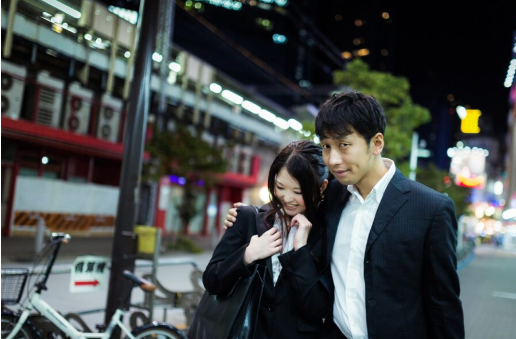
<p>Your chances of meeting new people and making connections in Japan depend greatly on the setting and location.</p>Different venues attract different types of people, and the social norms for striking up conversations vary by location.
Choosing the right social setting makes it much easier to have natural conversations and build genuine connections.
Based on cultural observations and experience, here are eight types of places that are well-suited for socializing and meeting new people in Japan.
Social Spot (1): Downtown Entertainment Streets
When it comes to meeting people, foot traffic and social energy matter. Downtown entertainment areas naturally facilitate social encounters.
Popular areas for socializing include:
- Kabukicho, Shinjuku
- Dogenzaka and Miyamasuzaka in Shibuya
- Sunshine City area in Ikebukuro
- Corridor Street in Ginza
A wide variety of people gather in these entertainment districts, making it easier to find someone open to conversation.
You will encounter many different types of people in these areas:
- People out for dinner or drinks
- Office workers enjoying after-work socializing
- People who enjoy nightlife
- Entertainment industry workers
There are always people around regardless of whether it is a weekday or a weekend.
However, keep in mind that most people in these areas are not specifically looking to meet strangers.
People will be receptive to conversation only when the timing and context feel natural.
If someone does not seem interested in talking, respect their space and move on.
Understanding Japanese social customs, including how to approach someone politely, is important. The culture of "nanpa" (casual street socializing) has specific social norms that differ from Western approaches.
Social Spot (2): Nightclubs
Nightclubs are among the most social venues in Japan, where people naturally expect to meet new people.
Many clubgoers are open to meeting new people, making it a welcoming environment for socializing.
The types of people you can meet at clubs include:
- Fashion-forward individuals
- Gyaru-style fashion enthusiasts
- Travelers and tourists
- Western music enthusiasts
- Dance enthusiasts
The club scene in Japan tends to attract a younger demographic, primarily people in their 20s.
People in their 30s and older are less common at mainstream clubs, though venues specializing in specific music genres attract a broader age range.
At genre-specific clubs, people tend to come primarily for the music and may be less interested in socializing with strangers.
Social Spot (3): Bars
If nightclubs feel too loud, bars offer a more relaxed alternative for meeting people.
Bars are particularly well-suited for people in their 30s and 40s who prefer a calmer social atmosphere. While clubs tend to attract younger crowds, bars cater to a broader age range of adults.
Many patrons are in their mid-20s or older, and the relaxed atmosphere makes conversation flow naturally.
Japanese bars often have a communal seating culture that facilitates conversation between strangers. Unlike some Western bars, customers frequently get to know each other and enjoy drinking together.
Sitting at the counter naturally creates opportunities for conversation with people nearby.
If someone is sitting alone at a bar, they are often open to friendly conversation. In Japanese bar culture, it is generally considered sociable to engage with other patrons.
The combination of a relaxed atmosphere and shared drinks naturally facilitates getting to know new people.
For an even more casual setting, izakaya (Japanese pub-restaurants) also provide good social environments.
Social Spot (4): Beaches
Japanese beaches are classic summer socializing destinations with a long tradition of casual social interaction.
The open, relaxed atmosphere of the beach makes it natural to start conversations with new people.
Enoshima, Shonan, and Shirahama Beach in Izu are particularly popular social beaches in the Tokyo region.
Beach culture in Japan has a tradition of social openness, where striking up conversations with strangers is considered normal and expected.
Beachgoers tend to be outgoing and active, and the vacation atmosphere makes people more relaxed and social.
Sharing food and drinks on the beach is a common way to build connections with new acquaintances.
The key to beach socializing is matching the relaxed, energetic atmosphere of the environment.
Social Spot (5): Busy Intersections
A natural opportunity for brief conversation arises when people are waiting at crosswalks.
When a traffic light turns red at a busy intersection, there is a brief natural pause that can facilitate a quick, friendly exchange.
Major intersections in busy areas always have foot traffic at all hours.
These moments are suited for quick introductions or exchanges of contact information rather than lengthy conversations.
Casual conversation starters -- such as commenting on the weather or asking for directions -- can work well in these situations.
Social Spot (6): Popular Meeting Spots
Famous meeting points and landmarks are locations where people are naturally standing still, which can facilitate conversation.
- Station entrances and exits throughout the city
- Iconic plazas (e.g., Shinjuku's underground "eye" meeting point)
- Famous landmarks (such as the Hachiko and Moyai statues at Shibuya Station)
These locations attract people who are waiting for someone, which means they may have a few minutes for a brief conversation.
However, since people are typically waiting for someone else, lengthy conversations are generally not possible.
A brief, polite introduction and exchange of contact information is the most realistic approach at these locations.
Social Spot (7): Retail and Shopping Areas
An often-overlooked social opportunity exists in retail environments, where shop staff are naturally inclined to engage in conversation.
Places that facilitate natural interaction include:
Department stores, fashion buildings, beauty salons, and various retail shops.
Retail environments are unique in that staff will naturally approach and engage you in conversation as part of their role.
This provides a natural opening for friendly interaction that does not exist in most other social settings.
Weekday mornings, when foot traffic is lighter, provide the best opportunities for relaxed conversations with shop staff in department stores and fashion buildings.
Social Spot (8): Dating and Matching Apps
Meeting people in Japan is also possible through online platforms.
While Western apps like Tinder and Bumble have some presence, Japan-specific apps tend to be more effective for connecting with local residents.
Popular Japanese dating apps include Omiai and Pairs, which have large user bases of Japanese nationals.
Japanese matching apps differ from Western dating sites in their approach. They typically require identity verification and are structured around more serious relationship-building rather than casual encounters.
For a monthly fee of around 3,000 yen (approximately $20-25 USD), you can communicate with unlimited matches. These platforms are well-suited for people who are persistent and enjoy written communication.
Most users on Japanese matching apps are looking for genuine romantic connections and long-term relationships.