Quick Reference
- What happened: Tokyo police arrested five people in May 2026 over unlicensed hostessing at four girls bars and concept cafes
- Districts hit: Kabukicho, Akihabara, Ikebukuro
- The legal line: staff behind the counter is legal, staff sitting beside you needs a license
- Risk to customers: very low, but your night ends abruptly
- Realistic cost: ¥3,000–¥5,000 per hour (~$20–$34 USD), plus ¥500–¥1,500 per staff drink
- Biggest red flag: a venue that will not quote a total price before you sit down
On the night of May 20, 2026, officers from the Tokyo Metropolitan Police walked into four small venues spread across Kabukicho, Akihabara, and Ikebukuro. The next day they announced five arrests, including Tomoko Nagata, the operator of a Kabukicho girls bar called Wisteria. The charge was not drugs, not prostitution, and not tax evasion. It was letting women sit down next to customers.
That sounds absurd until you understand the licensing system underneath it. And if you are planning to spend an evening in a Tokyo girls bar or an Akihabara concept cafe, which are genuinely the cheapest and least intimidating way into Japanese nightlife, it is worth ten minutes of your attention. Not because you are going to be arrested. You almost certainly will not be. But because the same legal shortcut that gets a venue raided is often the same shortcut that produces a 45,000 yen bill for two beers.
Nagata’s own defense, reported at the time of the arrests, captures the whole problem in one sentence. She admitted her staff had been sitting at the same table as customers, but said she could not accept that being called “entertaining.” That is not a dodge. It is a genuine argument about where a blurry line sits, and Japanese police have spent the last two years deciding it sits further toward the venue operators than the industry had assumed.
All four of the raided venues had already received administrative warnings. This matters. Police in Tokyo do not generally lead with handcuffs. They lead with a visit, a conversation, and a written instruction to stop. Arrest comes when a venue ignores that and keeps going. So the places getting raided are not unlucky. They are, by and large, repeat offenders who bet that enforcement would stay theoretical.
It did not. The pattern started well before 2026. In late July 2025, police arrested thirteen people connected to eight girls bars and referred four operating companies to prosecutors. One of them, a bar in Machida, had taken roughly 150 million yen over two years without a license, having been given administrative guidance that April and having carried on anyway. That was the first time a corporation, rather than an individual manager, was cited under the revised law.
The revised law is the other half of the story. Japan’s adult entertainment statute, usually called the Fueiho, was amended and took effect on June 28, 2025. The headline changes targeted host clubs and the practice of pushing indebted customers into sex work, which is a different article. But the amendment also sharpened the teeth on unlicensed operation generally, raising the maximum penalty from two years in prison to five, and the maximum fine from two million yen to ten million.
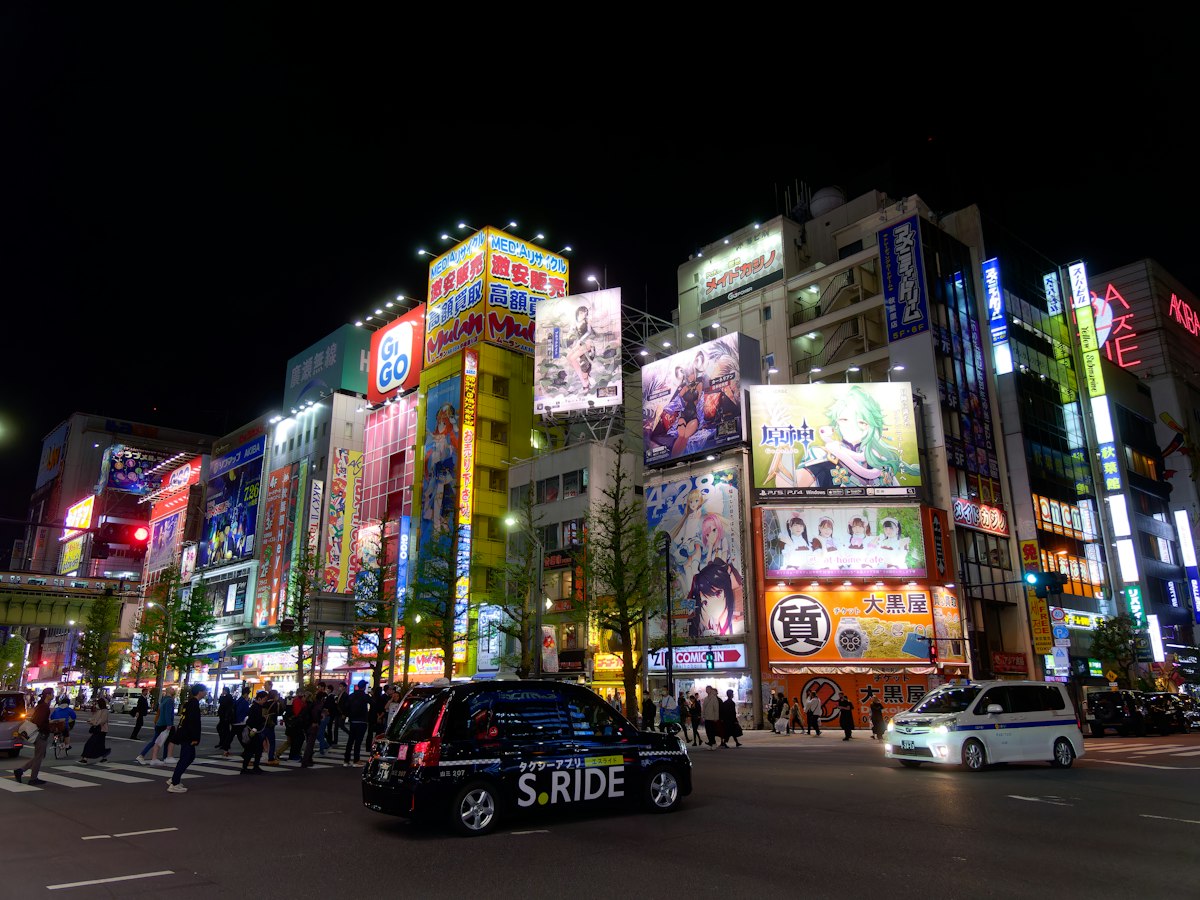
Akihabara got the same treatment on a parallel track. In April and May 2026, police arrested managers and an owner across multiple concept cafes for the same offense, and locals immediately noticed fewer costumed staff handing out flyers on the street. One cafe charged 7,000 yen for a cola worth about 200 yen at a convenience store, with the price justified by a maid staying with the customer until he finished it. That is the business model stated out loud, and it is exactly what the law says requires a license.
So here is the practical upshot for a visitor in late 2026. The category is not dead, it is being professionalized, and there is now a meaningful difference between the venues that have adjusted and the ones still running the old play. Learning to tell them apart takes about thirty seconds at the door.
What a Girls Bar Actually Is
A girls bar, in Japanese garuzu ba (ガールズバー), is a small counter bar staffed by young women who mix your drinks and talk to you across the bar. Most are on the third or fourth floor of a narrow building, hold between eight and twenty people, and charge by the half hour or hour. The appeal is that it is cheap, it is casual, and the conversation is light. If you want the fuller picture on how a normal visit unfolds, our girls bar guide covers the mechanics.
The defining physical feature is the counter. In a girls bar, the counter is not furniture. It is the legal boundary. Staff work on one side of it and customers sit on the other, and as long as that holds, the venue is a bar with attractive bartenders rather than a regulated entertainment business.
Girls bars emerged from Osaka in the mid-2000s and spread fast, and even at the time the National Police Agency was describing them bluntly as a rearranged hostess club built to exploit a gap in the law. What changed is not the business model. What changed is how much patience the police have for it.
Concept Cafes and the Akihabara Variant
A concept cafe, shortened in Japanese to konkafe (コンカフェ), is a themed cafe where the staff perform a role. Maid cafes are the ancestor, but the genre now includes vampire bars, idol cafes, school-themed venues, and dozens of niche aesthetics. The draw is atmosphere and interaction rather than alcohol, and the crowd skews younger and more otaku than a Kabukicho girls bar.
Concept cafes matter here because they lean on a slightly different loophole. A venue licensed for entertainment has to close at midnight or 1 a.m. depending on the zone, while an ordinary restaurant has no legally mandated closing time at all, because food service is its stated main business. Registering as a restaurant while functioning as a companionship venue is what several Akihabara cafes were arrested for.
The Licensing Gap in Plain English
Japanese nightlife venues sit in different regulatory boxes, and the box determines what the staff are allowed to do with their bodies.
A regular eating and drinking establishment files a restaurant registration. If it wants to serve alcohol after midnight, it files an additional notification as a late-night alcohol serving business. This is cheap, fast, and mostly a paperwork exercise. What it does not permit is sekkyaku (接待), the legal term for entertaining a customer: sitting beside them, pouring their drinks, lighting cigarettes, singing with them, and giving sustained one-on-one attention.
To do sekkyaku, a venue needs a Type 1 license under the Fueiho, the same category that covers kyabakura and host clubs. That license is expensive, slow, comes with building and lighting requirements, restricts where the venue can be located, and, critically, forces it to close at midnight or 1 a.m.
Read those two paragraphs together and the incentive is obvious. The licensed venue pays more and closes earlier. The unlicensed one pays less and stays open until dawn. A girls bar that quietly lets staff come around the counter is buying hostess club revenue at bar prices, and that arbitrage is exactly what the crackdown is aimed at.
The distinction is also why “she sat next to me” is the sentence that decides everything. It is not about nudity, contact, or anything sexual. A perfectly chaste conversation on a sofa is regulated. A flirtatious one across a counter is not. If you want the licensed version of the experience, our hostess club guide explains what you are actually paying for.
What a Raid Looks Like, and What It Means for You
Enforcement in Tokyo is not dramatic. There are no battering rams. Plainclothes officers typically visit as customers first, document what they see, and come back. The venue is closed, staff and management are taken in for questioning, and the door gets papered.
If you happen to be sitting there when it happens, the honest answer is that nothing much happens to you. The offense in these cases is the operator’s, not the patron’s. You are a witness, not a suspect. Expect to be asked to leave, possibly to give your name and contact details, and to lose whatever you had prepaid.
Two practical notes. Carry your passport or residence card, because foreign nationals in Japan are legally required to have identification on them at all times. And do not run. Walking out calmly when asked is the entire correct behavior.
The real cost of a raid to a tourist is not legal. It is that your Saturday night ends at 10 p.m. in a stairwell. Our Tokyo nightlife safety guide covers the broader set of things worth avoiding.
How to Spot a Legit One
Check for a posted price board. Legitimate venues in Tokyo post their set charge, time increments, and service percentage either at street level or immediately by the door. A venue confident in its pricing advertises it. One that hides it is planning something.
Look at where the staff are. If you can see into the room and the women are behind a counter, the venue is running the compliant model. If there are sofas, low tables, and staff seated beside customers, the venue is either licensed as a hostess club, in which case the price will reflect that, or it is operating on borrowed time.
Check the closing time. A venue advertising service until 5 a.m. is not a licensed entertainment business, because licensed ones cannot legally be open then. That is fine for a counter bar. It is a contradiction if the venue is also promising you seated companionship.
Refuse the tout. In Kabukicho, street solicitation for these venues is itself restricted, and a man who physically walks you to an elevator has a financial interest in what happens to your wallet upstairs. The venues worth your money in 2026 mostly do not need touts.
Ask three questions before you sit. What is the total per hour including service charge? Is there a card surcharge? What is the minimum stay? Ask on a calculator if the language is a barrier. Any hesitation is your answer.
Realistic Costs in 2026
A standard Tokyo girls bar charges roughly 3,000 to 5,000 yen per hour, about 20 to 34 US dollars, typically bundling your own drinks into the set. Some venues use 30-minute blocks at 1,500 to 2,500 yen instead. On top of that, a service charge of 10 to 20 percent is normal and should be disclosed.
Staff drinks, the small glasses you buy for the woman serving you, run 500 to 1,500 yen each. They are optional, they are the venue’s main margin, and buying one or two is the polite middle ground. Buying eight is how a cheap night stops being cheap.
Bottle keep, where you buy a whole bottle of shochu or whisky to store at the bar, starts around 8,000 yen and runs well past 30,000. It only pays off if you are genuinely coming back.
Concept cafes work differently. Expect an entry or seating charge of 1,000 to 2,000 yen, drinks at 800 to 1,500, and then a menu of paid extras: a photo with a staff member, a drawn message on your omelet rice, a few minutes of conversation time. Priced individually these are small. Stacked, they are not.
A reasonable target for a good two-hour girls bar evening in 2026 is 8,000 to 12,000 yen. If you want the broader budget picture, our cheapest adult entertainment in Tokyo breakdown puts these numbers in context against other categories.
The Classic Bill Scams
The nomihodai trap is the most common. All-you-can-drink is advertised for a flat fee, but it covers only a narrow list of house drinks, and anything a staff member suggests falls outside it. You think you are drinking against a flat rate. You are not.
The time-block trap is the second. A venue quotes 2,000 yen per 30 minutes and then rounds every partial block upward, so 65 minutes becomes three blocks. Compounded with a minimum stay and a service charge, a quoted 4,000 yen hour becomes 9,000.
The card surcharge is the third. Cash is normal in this industry, and a venue that only reveals a 15 or 20 percent card fee once your card is already in the machine is telling you what kind of business it is. Bring cash, and decide your ceiling before you go up the stairs.
The substitution scam is the fourth and the ugliest. You order a house highball and get billed for a premium bottle pour you never asked for. This is where an itemized receipt earns its keep. Ask for one, in Japanese “reshiito o kudasai,” and check it at the table rather than at the door.
If a bill arrives wildly out of line with your quote, do not pay in silence and do not start a fight. Say the amount differs from the quoted price, ask for the itemization, and if the venue escalates, say you want to call the police. Both legitimate and scam venues tend to settle at that point, for opposite reasons.
Where to Start Instead
The honest recommendation is to skip the guesswork on your first night. Venues that consistently serve foreign customers have already solved the price transparency problem, because ambiguity does not work on a customer who cannot read the room.
Our venue directory lists establishments with their district, nearest station, price band, and whether English is actually spoken rather than nominally offered. Go to a specific address rather than wandering a street and letting a tout choose for you.
For the wider landscape, the complete Japan adult entertainment guide explains how girls bars sit relative to kyabakura and snack bars, and the best foreigner-friendly venues in Tokyo narrows that to places that will not turn you away at the door.
If the appeal for you is genuinely the conversation rather than the theme, consider an aisekiya instead. Shared-table bars are transparently priced, entirely legal, and put you across from other customers rather than staff.
The crackdown is not aimed at you, and it is not a reason to avoid this corner of Tokyo nightlife. It is a reason to prefer venues that have nothing to hide, which in 2026 are easier to identify than they have been in years. A venue lying to the licensing authority is not going to be straight with you about a bar tab. Parallel enforcement has reshaped the host club side of the industry too, covered in our host club crackdown piece.