Quick Reference
- What changed: Revised fueiho (風営法) phased in June 28 and November 28, 2025
- Banned: Romance sales tactics, coercion into sex work, scout kickbacks, earnings billboards
- Not banned: Host clubs themselves, or the urikake tab system
- First-visit cost: ¥2,000 – ¥5,000 (~$14 – $34) for 1 – 2 hours
- Return visit: ¥5,000 – ¥15,000 set charge plus drinks and ~30% service
- Foreigner-friendly: Improving at higher-end venues; book ahead, never follow a tout
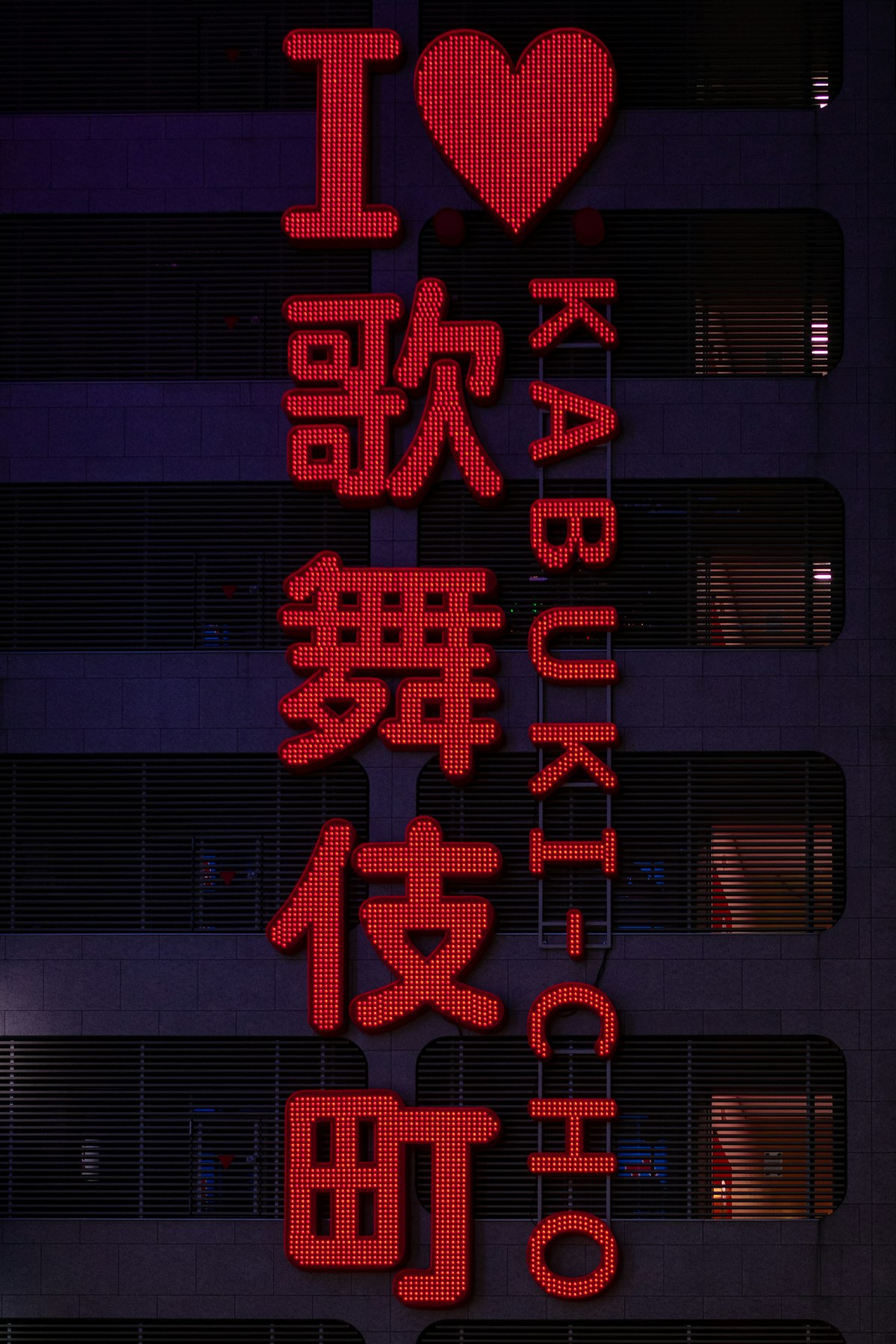
Walk east out of Shinjuku Station on a Friday night in 2026 and Kabukicho still hits you like a wall of light. What is missing takes a minute to register. The giant billboards that once loomed over Central Road announcing that some twenty-three-year-old in a silver suit had booked over one hundred million yen in annual sales are gone. In their place are boards with names, faces, and almost nothing else. No rankings. No crowns. No numbers.
That change is the most visible result of the biggest regulatory intervention in Japanese nightlife in decades. In 2025 the Diet amended the Businesses Affecting Public Morals Regulation Act, known in Japanese as the fueiho (風営法), specifically to break a pattern that had become impossible to ignore: young women running up crushing debts at host clubs, then being pushed toward sex work to pay them off.
A year and change later, the honest assessment is uncomfortable. The billboards changed. The business model largely did not. And in some respects, according to the people closest to it, the clubs have grown more careful and more predatory at the same time.
This is not a reason to avoid Kabukicho, and it is not a reason to avoid host clubs. It is a reason to understand exactly what you are walking into, what you are buying, and where the line sits between a genuinely fun night out and a machine built to separate someone from everything they have. For a broader orientation to the district and its venue types, start with our complete guide to Japan’s adult entertainment scene.
What the 2025 Law Actually Banned
The amendments arrived in two tranches, on June 28 and November 28 of 2025. Strip out the legal language and they come down to five things.
First, romance sales tactics, what the Japanese press calls irokoi eigyo (色恋営業). It is now explicitly illegal for a host to knowingly exploit a customer’s belief that the relationship is romantic, and to tell that customer the relationship will end unless they keep spending. This was the engine of the whole system, and the law names it directly.
Second, coercion into sex work. Hosts cannot pressure or lure a customer into the sex industry to settle a bill, cannot threaten to contact her family over unpaid debt, and cannot steer her into sex work overseas to sidestep Japanese prostitution law.
Third, scout kickbacks. Paying recruiters who funnel women into nightlife and sex work is now prohibited, targeting the referral economy that sat quietly underneath the debt.
Fourth, tab discipline. Pushing a customer into large orders on urikake, beyond any realistic ability to pay, is now a regulated practice. Note the careful wording. The tab system itself was not abolished.
Fifth, advertising. Signage that manufactures an indulgent, competitive atmosphere is out. That covers sales figures, rankings such as No.1 requested host, status titles like Champion, God and Legend, phrases such as sales battle or follower counts, and possessive appeals inviting customers to support or drown in a particular host. Penalties were sharpened to match, reaching six months and ¥1 million for an individual host, five years and ¥10 million for an operator, and up to ¥300 million for a corporation operating without a license, up from a previous ceiling of ¥2 million.
What Changed on the Street, and What Did Not
The advertising rules worked, because they had to. Compliance is visible from the sidewalk. On the night of June 27, 2025, clubs across Kabukicho simply taped over their boards, blanking out slogans until compliant replacements could be printed. Host-ranking sites stripped earnings tables and status labels from profiles within days. If you last visited in 2023, the district genuinely looks different.
Almost nothing else did. Tokyo Metropolitan Police, who oversee Kabukicho, have reported a single arrest under the new provisions. Arrests connected to host clubs overall actually fell, from thirteen in 2024 to five in the year that followed, which is the kind of statistic that can mean enforcement is working or that the behavior simply moved somewhere harder to see.
Reporting by Unseen Japan points firmly to the second reading, and documents the workarounds in detail. Rather than the club carrying a tab, individual hosts started taking the debt personally, which keeps the business off the hook. Customers get steered toward consumer loans before they ever walk through the door, so the money is already borrowed and the club never extends credit at all. The scripted romance moved into ordinary language, with hosts using plain phrases like suki (好き, I like you) and aitai (会いたい, I want to see you) that no prosecutor can distinguish from sincerity. Conversations shifted from text to voice and video calls, which leave no evidence. Some clubs began asking new customers to show a health insurance card, screening for undercover officers.
One woman interviewed about the aftermath put it bluntly: the stores have taken up tactics to avoid being caught, and they are more malicious than ever. Another reportedly ran up a ¥7 million tab, roughly $47,000, in a single night. Her host was still working at the same club.
The Debt Pipeline, Without the Sensationalism
Okubo Park sits at the northern edge of Kabukicho, a small patch of green behind the Hotel Street cluster. For several years it has been the most visible street solicitation spot in Tokyo, and the connection to host club debt is not speculation. It is in the arrest data.
Tokyo police arrested forty women for prostitution in the Kabukicho area in the first half of 2026. Twenty-eight were in their twenties, nine in their thirties, three were teenagers, and one was a sixteen-year-old high school student. The single most commonly stated motive, given in eighteen of those cases, was funding visits to host clubs. Separate reporting on arrests since January 2026 found roughly forty percent of the women cited host club debt.
It is worth stating clearly what this is and is not. It is not a story about women being kidnapped. It is a story about a debt instrument with no consumer protections wrapped inside a manufactured relationship, aimed at people who are often young, often isolated, and frequently recruited through social media rather than off the street. Police have noted that a significant number of women still arrive at Okubo Park after learning about the scene online.
The arrest figure of forty was down by thirty-five compared with the same six months a year earlier, which is genuine progress worth acknowledging. Support programs offering housing, living costs, job placement and medical care are now routinely offered at the point of arrest, though uptake has historically been low, reported in the range of twenty to thirty percent.
For visitors, the practical takeaway is simple and unglamorous. The women soliciting around Okubo Park are, in a meaningful number of cases, people in acute financial distress, and the transaction is illegal for both parties under the Anti-Prostitution Law. We cover the realities and risks of that scene in more depth in our guide to Tokyo street solicitation. There is no version of participating in it that is a good idea.
Host Clubs, Hostess Clubs and Kyabakura: What You Are Actually Buying
These three get flattened together in English writing, which causes real confusion about price and risk.
A host club (ホストクラブ) employs men who entertain a predominantly female clientele. A hostess club and a kyabakura (キャバクラ) both employ women entertaining a predominantly male clientele, with kyabakura being the more casual, higher-volume, cheaper tier and the traditional hostess club being the older, quieter, more expensive one. Our Tokyo hostess club guide breaks that distinction down properly, and our girls bar guide covers the cheapest rung, where you drink at a counter and there is no seated companion at all.
What you are buying in all of them is conversation, attention, and drinks poured by someone whose job is to make the hour feel good. None of them are sex venues. Nobody is going home with you. Treating the interaction as the beginning of a relationship is precisely the misunderstanding the 2025 law was written about.
On cost, the numbers are unusually predictable. A first visit to a host club, known as hatsukai (初回), usually runs about ¥2,000 to ¥5,000, roughly $14 to $34, for one to two hours, typically bundling the cover charge with basic all-you-can-drink. That introductory rate is a loss leader, and it is deliberately cheap. Come back and you are on the standard set charge, somewhere around ¥5,000 to ¥15,000 for one to two hours, with drinks at ¥1,000 to ¥3,000 a glass, bottles starting in the tens of thousands, champagne reaching toward ¥100,000, and a service charge frequently around 30 percent layered on top. Kyabakura sit in a comparable range. Traditional hostess clubs in Ginza run considerably higher.
Which brings us back to urikake. A tab at a host club is an informal line of credit with no bank behind it, no contract protections, no regulated interest, and an entire social apparatus designed to make you feel that settling it is a matter of loyalty rather than money. The 2025 amendments restricted how aggressively clubs can push you into one. They did not make the instrument disappear. Pay in full before you walk out, every single time, and the entire mechanism this article is about cannot touch you.
Red Flags in 2026
Street touts remain the number one financial risk in Kabukicho, and soliciting customers on the street for these businesses is itself restricted under the fueiho. A legitimate, licensed club does not need someone chasing you down Central Road in a suit. If a stranger approaches you on the street and offers to take you somewhere, the answer is no, delivered without slowing down.
Be skeptical of the free first hour. A genuine hatsukai rate is cheap but it is a stated price, printed and explained before you sit. Free is the pitch of a bottakuri (ぼったくり) bar, the classic Kabukicho rip-off, where the bill materializes at the end with charges nobody mentioned.
Get the total before you commit. Ask what the set charge is, how long the set runs, what the service charge percentage is, and what happens when the set expires. Any real venue answers all four without hesitation.
Watch card handling. Cash-only is normal and not itself a warning sign. What is a warning sign is an undisclosed card surcharge appearing at the end, or a card leaving your sight. Keep enough cash for the night and the issue never arises.
Finally, notice pressure. A host or hostess encouraging one more bottle is doing their job. A host suggesting you put it on tab, asking about your salary, floating a loan app, or implying the relationship depends on the order is showing you exactly the behavior the law now names. Settle up and leave.
If You Still Want to Go
You should, honestly. A well-run Kabukicho club on a first-visit rate is one of the more memorable and genuinely entertaining ninety minutes available in Tokyo, and the 2026 version of the district is better regulated than it has been in years.
Book ahead at a venue that advertises multilingual support rather than walking in cold, since the higher-end clubs increasingly staff English speakers for overseas visitors while most of the district still runs in Japanese. Bring cash, roughly ¥10,000 per person for a first visit with a comfortable margin. Confirm the set price, the duration and the service charge before you sit down. Decline every street tout. Go as a guest, not as a suitor. Pay the bill in full at the end and never open a tab. Set a walk-out time before you arrive and honor it.
For venue-by-venue options that are known to welcome non-Japanese customers, see our foreigner-friendly Tokyo venue guide and browse the venue directory. Before your first night out in the district, our Tokyo nightlife safety guide is worth fifteen minutes.
The lesson of the past year is not that Kabukicho became dangerous. It is that a law can change what a neighborhood advertises far faster than it can change what a neighborhood sells. The billboards came down in a single night. Everything underneath them is still being negotiated.