Quick Reference
- Biggest: Kabukicho, Shinjuku, Tokyo. Entertainment district first, red light district second
- Densest sex trade: Yoshiwara, Taito ward, Tokyo. Roughly 120 to 150 soaplands in a few blocks
- Most notorious: Tobita Shinchi, Osaka. Around 160 shops licensed as restaurants. No photography, ever
- Most tourist-comfortable: Nakasu, Fukuoka. Food stalls, river views, almost no touts
- Legal frame: 1956 Prostitution Prevention Law plus fueiho licensing. Street solicitation is the risky part
- Universal rules: Carry cash and ID, never follow a tout, never photograph a doorway
Ask an English speaker to picture a red light district and they will almost certainly picture Amsterdam. Lit windows, a woman behind glass, a transaction that announces itself from across the canal. Then they arrive in Kabukicho, stand under the famous red gate, and spend twenty minutes failing to find anything that matches the picture in their head.
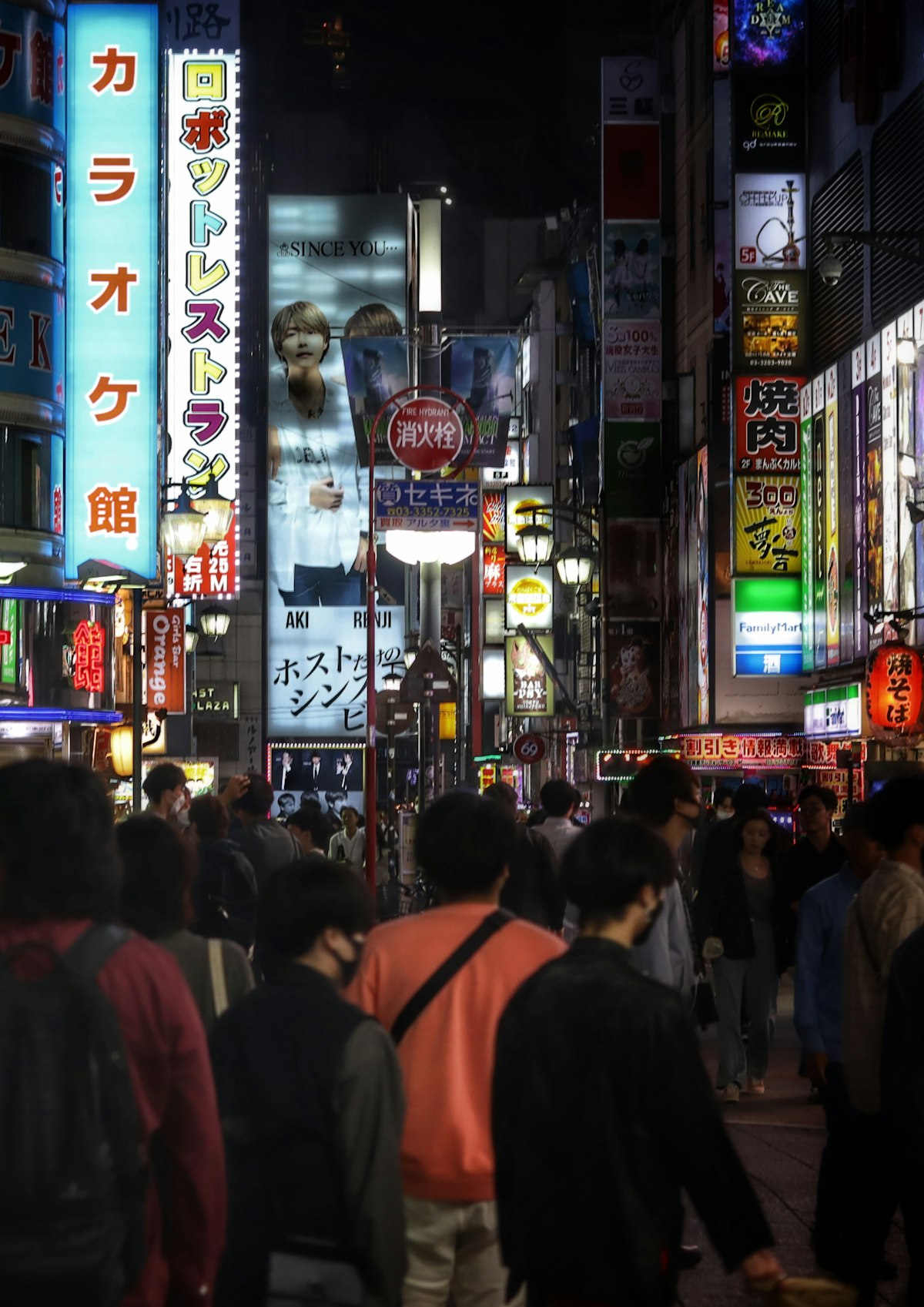
That failure is the most useful thing to understand about Japan’s red light districts. The signage is not hiding anything. It is addressed to somebody else. A Japanese regular reads a building directory and knows the fourth floor is a hostess club and the fifth is a girls bar. A visitor reads the same board and sees a wall of pink katakana.
So the districts hide in plain sight, and the ones that do not hide at all are the hardest to visit. Tobita Shinchi in Osaka puts a woman in an open doorway under a spotlight and bans you from photographing her. Yoshiwara looks, in daylight, like an unremarkable corner of old Tokyo. Neither performs for tourists, which is exactly why both keep turning up on tourist itineraries.
This is a hub guide to the districts themselves: where they are, what they are really like according to people who walked them recently, the foreigner reality at each, and what you risk if you misread the room. Everything below is built on dated first-hand accounts and published reporting, all linked, plus licensed photographs with attribution.
How the Law Shapes What You See
Two laws explain almost everything about the way these districts look.
The first is the Prostitution Prevention Law of 1956. It bans a narrowly defined act and criminalizes organizing, soliciting and profiting from it, but it never attached a penalty to the two people involved, and it never touched anything outside that definition. That gap is where the entire licensed fuzoku industry lives. We cover the mechanics in is prostitution legal in Japan.
The second is the Businesses Affecting Public Morals Regulation Act, the fueiho, the licensing regime that decides which venue types can exist, in which zones, until what hour, with what signage. It is also why some districts are a perfect rectangle. Yoshiwara’s permitted zone is defined by block numbers in Senzoku 4-chome, which is why the soaplands stop dead at a particular corner.
One change is pending. A Justice Ministry expert panel finalized a report on September 17, 2026 recommending criminal penalties for buyers who negotiate for sex in public or online, including loitering in an area to browse. It is a recommendation and not yet law, but it aims squarely at the street scenes below. We track it in Japan’s proposed law to punish sex buyers.
Kabukicho, Shinjuku, Tokyo
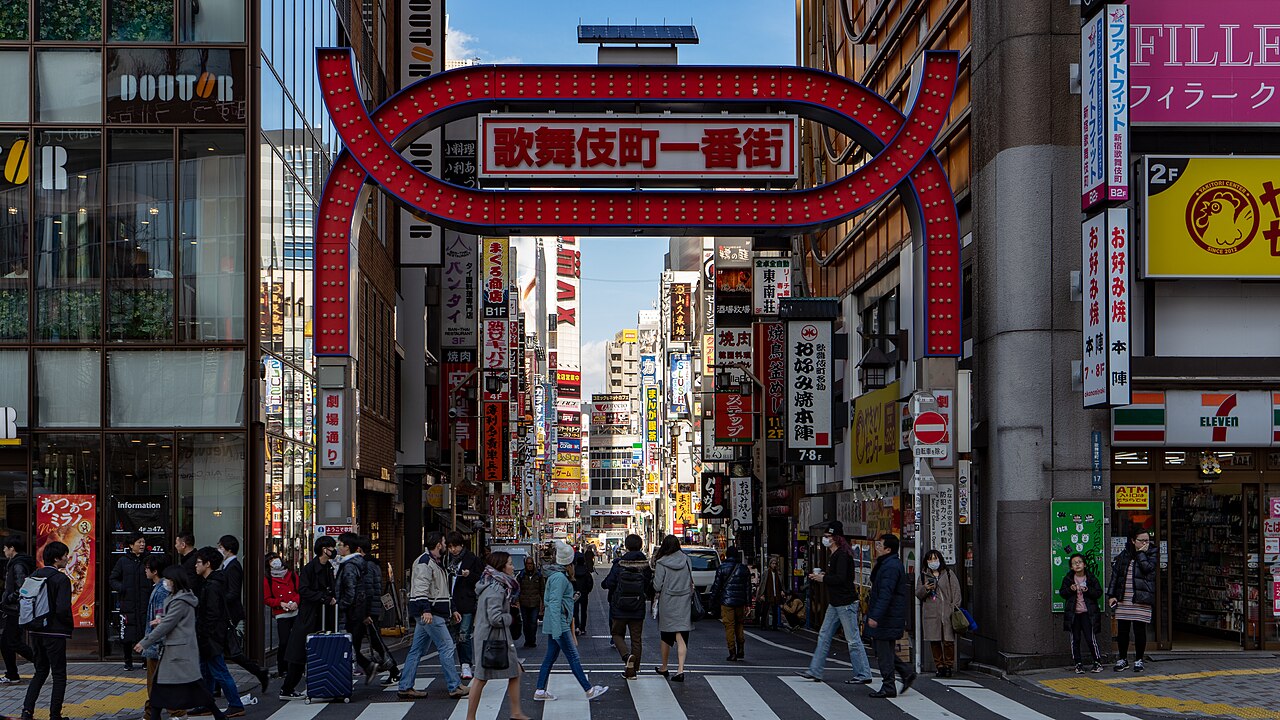

Kabukicho is about 0.35 square kilometers northeast of Shinjuku Station, and it is the largest entertainment district in Japan. Calling it a red light district is half right. Most of it is food, karaoke, cinema, arcades, host clubs, hostess clubs and ordinary drinking, with the adult venues threaded through the same buildings, usually above a ramen shop.
What it is really like depends on whether anybody approaches you. A traveler writing up a visit for The Culture Map in August 2024 was approached by a tout within two minutes of entering, offering to walk him to a bar he supposedly knew. That writer’s verdict was that anyone reasonably street-wise will be fine, and that is the correct read. The danger here is not physical.
It is financial, and it is organized. Unseen Japan reported in February 2024 on the arrest of fifteen people running a scheme in which touts posed as staff of the budget chain Torikizoku, some wearing fake headset microphones to look official, told customers the branch was full, and walked them to an affiliated shop instead. One customer expecting around ¥1,500 a head paid roughly ¥4,000 plus a service charge. SoraNews24 published an itemized version of the same trick back in December 2021, where a ¥8,554 bill for almost nothing included a ¥1,000 seating charge, a ¥1,000 weekend charge and a separate ¥1,000 year-end charge.
That is not an anecdote problem any more. Shinjuku police received 91 reports between January and June 2026 from people who had followed a tout and been charged excessive amounts, with total reported losses of around ¥99 million. Most of the victims were overseas visitors. The figures were released alongside the arrest of a 53-year-old Nigerian national in Kabukicho 1-chome on July 9, 2026, under the Tokyo anti-nuisance ordinance, as reported by Japan Today.
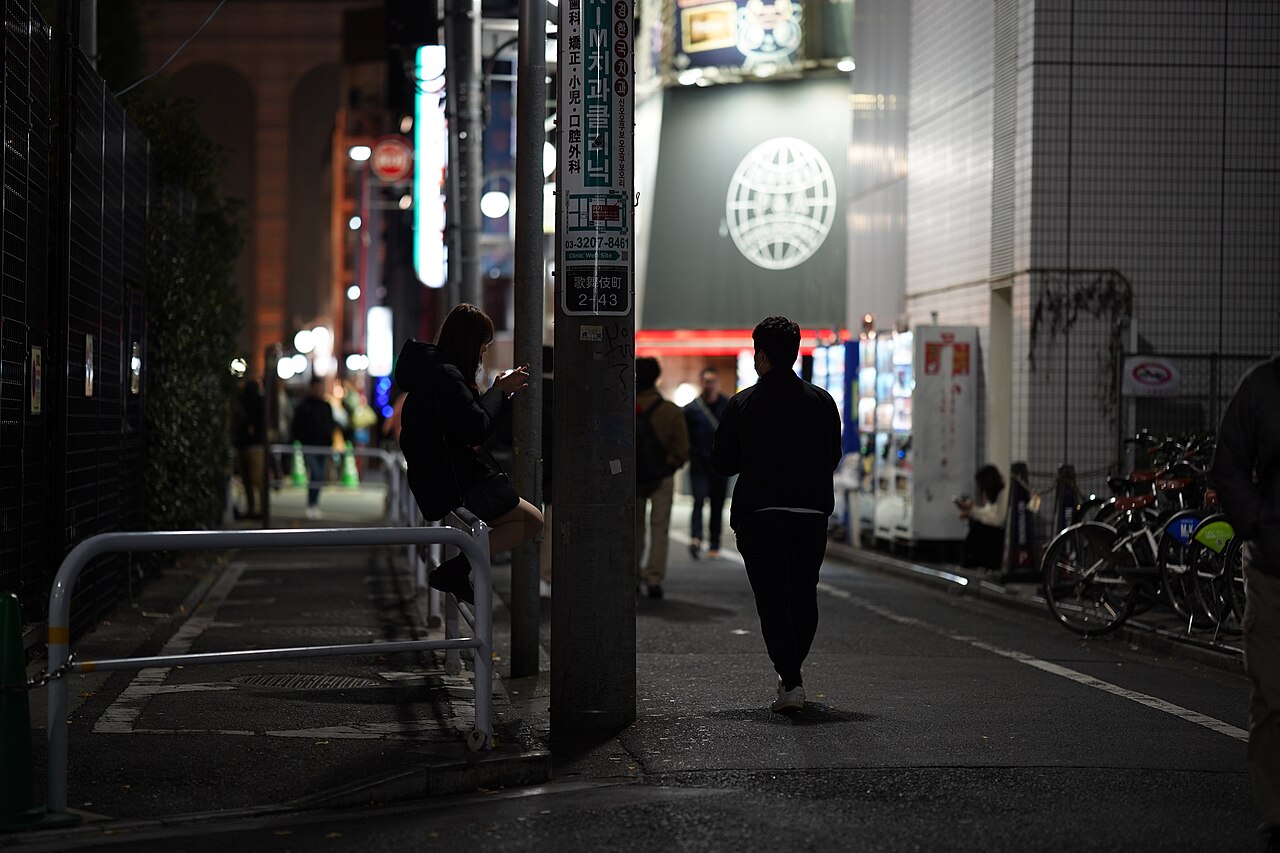

The other Kabukicho story is Okubo Park. Arrests for street solicitation around the park ran to 75 in the first half of 2025, more than double the 35 a year earlier, and 112 across the whole year. Police figures put the average age at 25 and the youngest at 16, with around 40 percent citing host club or concept cafe payments. Tokyo Shimbun quoted one arrested woman saying roughly 70 percent of her customers were foreign visitors, many of whom found the location through social media.
Enforcement has moved people rather than ended anything. A Shueisha Online field report in August 2026 found the women had relocated out of the park proper into the surrounding love hotel blocks, and a companion piece by reporter Yamakawa Rinka walking those blocks at night found middle-aged men still loitering and scanning passers-by even where the women were far less visible. We cover that scene and its legal exposure in detail in the Okubo Park street solicitation guide.
Foreigner reality: good and improving at licensed venues, particularly the higher-end host clubs and foreigner-facing hostess bars. Bad on the street, where you are the target demographic for the overcharging rings. The 2025 host club law reshaped the billboards and some of the sales practices, which we unpack in the host club crackdown one year on.
Specific risk: being walked into an unlicensed bar by a friendly stranger. If you want the atmospheric Shinjuku night out without any of this, Golden Gai is a two-minute walk away and operates on completely different rules.
Yoshiwara, Taito Ward, Tokyo
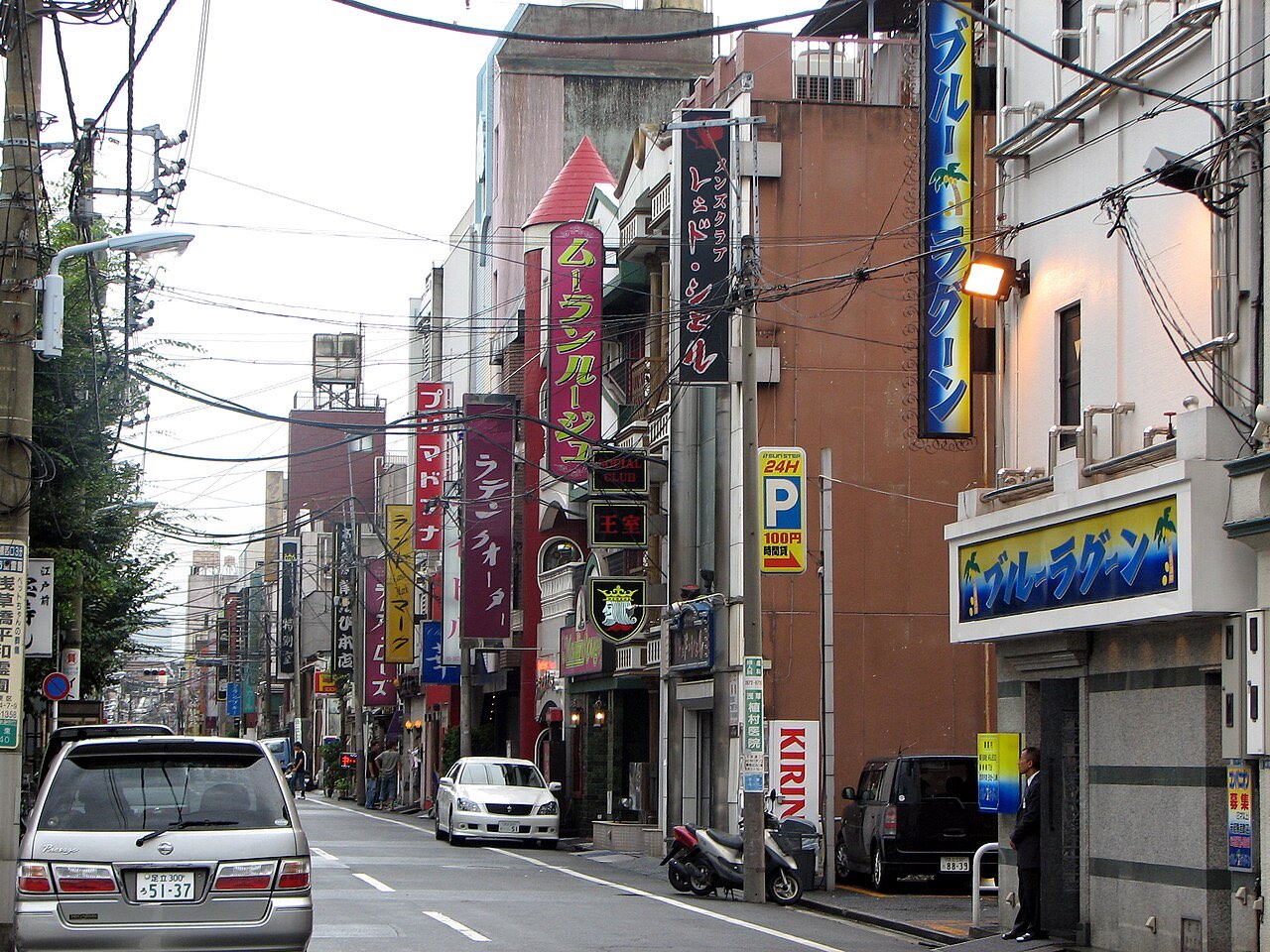

Yoshiwara was Edo’s single licensed pleasure quarter, walled and moated, from 1617 until the Prostitution Prevention Law closed it as a legal institution. Today it is Senzoku 4-chome in Taito ward, eight minutes on foot from Minowa Station on the Hibiya Line, and the densest concentration of soaplands in Japan. Current estimates range from about 120 to 150, with no single authoritative figure.
Nobody expects how quiet it is. A Japanese walking blogger who covered the quarter repeatedly between 2022 and 2023 and wrote it up on note.com in January 2024 counted roughly 120 shops and found foot traffic sparse at every hour he tried. There were fewer touts at night than during the day, because evening customers arrive on reservations. What fills the street instead of pedestrians is parked taxis and shop shuttle cars, delivering people to the door.
A 4travel travelogue from the same month picks out the architectural tells: soaplands are identifiable from blocks away by rooftop water tanks and boiler flues, and several coffee shops along Nakanocho-dori function as booking offices, descended directly from the Edo-era teahouses that did the same job. That writer’s own caution was blunt. This is not a tourist destination.
A third walker, on Tabidan Tokyo in March 2023, deliberately started at 7:05am specifically so he would not photograph anyone working. In daylight the historical layer surfaces: the S-curve of Emonzaka, built so you could not see into the quarter from outside, the surviving retaining walls of the Ohaguro-dobu moat, and Yoshiwara Shrine.
Foreigner reality: genuinely mixed, and the mix is shifting. A 2024 field report by sex industry journalist Akira Ikoma for FRIDAY counted around 126 soaplands and found a guide signboard on Nakanocho-dori listing which shops accept foreign customers, one shop advertising entirely in English, and a budget chain posting trilingual signage. At the same time, refusals are real and sometimes stated outright. The Yoshiwara shop Chocolat publishes its own policy, declining anyone who does not speak Japanese as a first language, citing communication breakdown, customers not understanding the system, and what it calls differences in sexual culture.
Specific risk: low, physically. The real risk is walking in without a reservation and being turned away at three doors in a row, which is a bad use of an evening. Book through a shop that states a foreigner policy. Our soapland guide explains the format and the 2026 Tokyo roundup covers which venues work for visitors.
Tobita Shinchi, Nishinari, Osaka
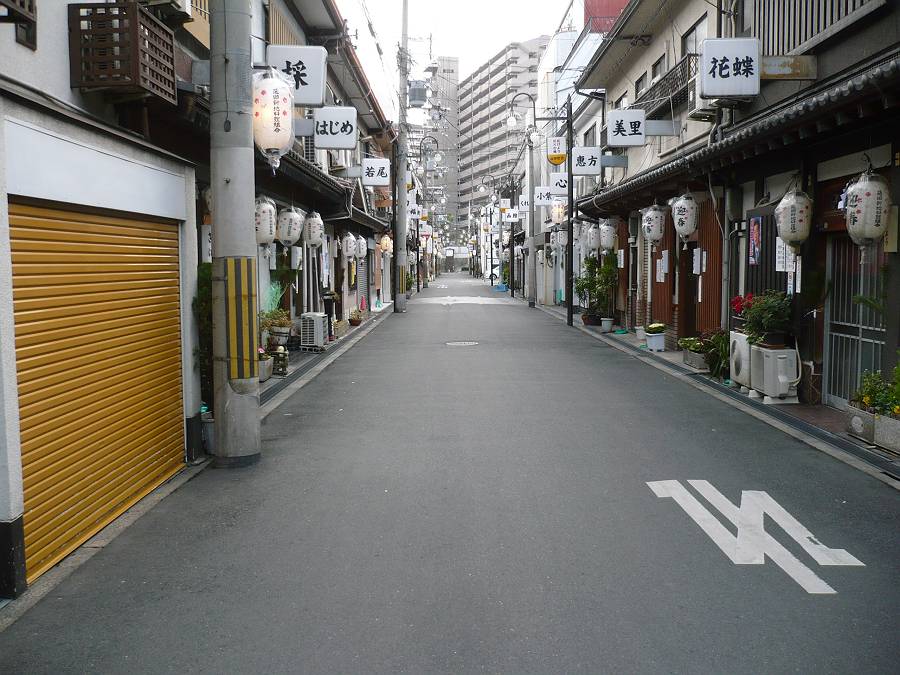

Tobita Shinchi is the most visually extraordinary district in Japan and the one to think hardest about before visiting. Roughly a 400 meter square in Nishinari ward, it holds about 160 establishments, every one licensed as a ryotei, a traditional Japanese restaurant. Under Osaka’s working interpretation the customer buys tea and a snack in a private room, and whatever happens next between him and the woman serving it is treated as a private matter. That legal fiction is the whole district.
What you see is a lit tatami entrance, a young woman seated in it, and an older woman beside her doing the talking. Ikoma walked the quarter on a Thursday afternoon in April 2024 for FRIDAY and found it already fully operating at 16:30, with Chinese, Korean, Western, South Asian and Middle Eastern men on the street. He names Main-dori and Seishun-dori as the two prestige streets, and notes bilingual no-photography signs posted throughout.
A second Ikoma piece from June 2024 follows the same street across a full 24 hours, and the daytime material is the part worth knowing. At 07:55 the street is completely empty, which he compares to the morning after a festival. By 09:30 the women are arriving for their shifts in hats and masks to avoid being recognized, passing elderly men on bicycles. At 13:45 an ambulance drove straight through, which is his way of making the point that Tobita is simultaneously another world and an ordinary neighborhood where people live.
The most useful account for a visitor is not from a customer at all. A Japanese blogger walked through in August 2025 in a group of four women, heading to a dinner reservation at Taiyoshi Hyakuban, the former brothel that is now a registered cultural property restaurant. The calls from the doorways went only to male passers-by. Her group was ignored by the seated women and openly glared at by the older touts, and she wrote that she felt genuinely sorry for having walked through out of curiosity. That is the most accurate preview of the experience you will find.
Photography: do not. Trade publication Pinzuba reported in November 2024 that the entire area including the public street is treated as off limits, that even a selfie is disallowed if the surroundings are in frame, and that the soliciting women call out at anyone pointing a camera. An industry insider told them English had been added to the warning notices but conceded that watching everyone is impossible. The cooperative itself declined to comment.
Foreigner reality: poor and not improving. Japanese fluency is effectively a requirement at most shops, and the quarter’s visible frustration is specifically with sightseers who come to look and film rather than to spend. Treat Tobita as a place you have read about, not a place you tour. Osaka has a great deal else going on, and our Osaka nightlife guide covers the parts that will actually welcome you.
A short walk away, Matsushima Shinchi runs the same ryotei model with around 80 shops. Ikoma’s June 2024 comparison is that where Tobita feels like a meticulously designed film set, Matsushima is a maze without maps, with two or three women often seated together in a single doorway rather than one.
Susukino, Sapporo
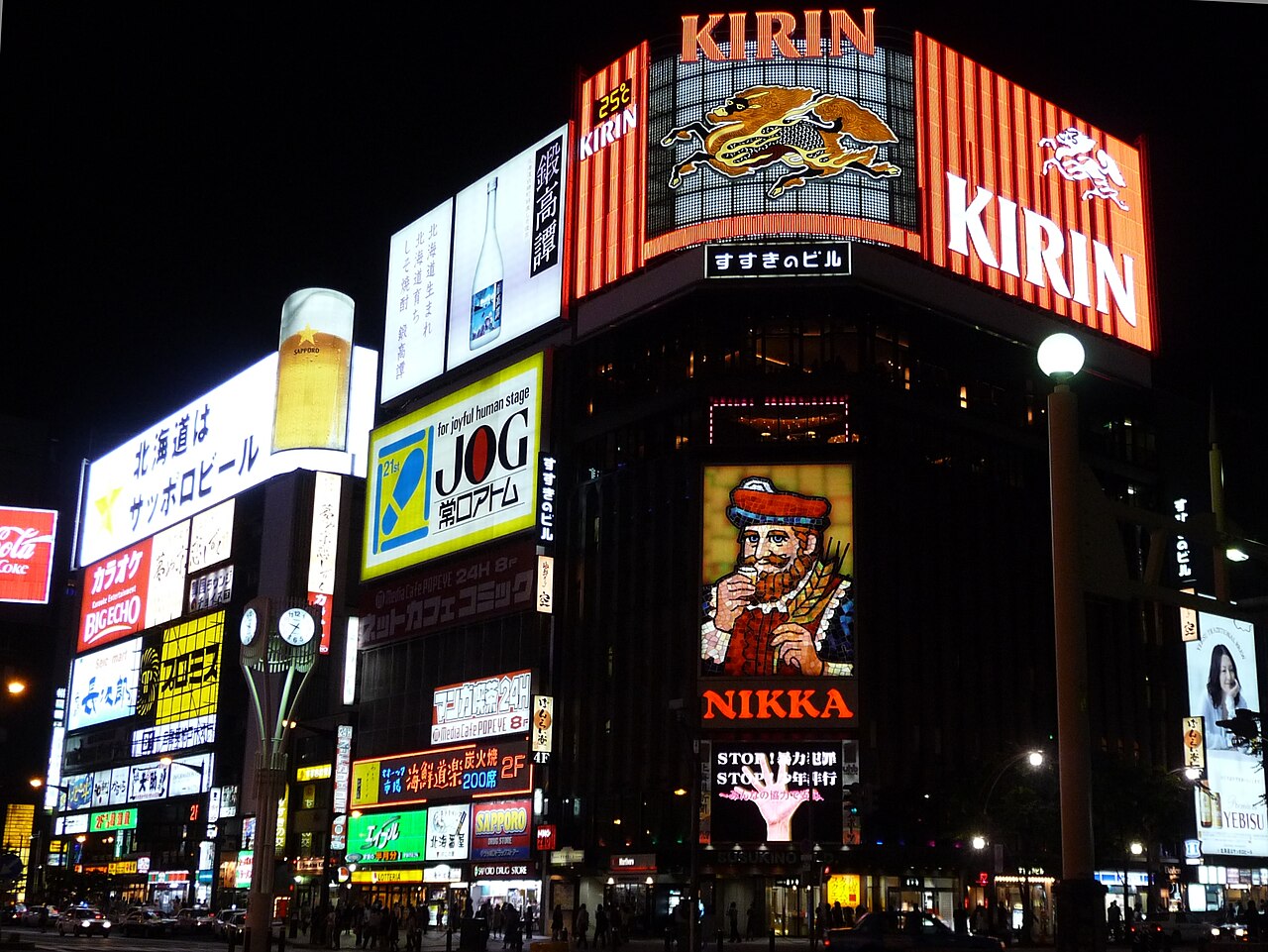

Susukino is the largest entertainment district north of Tokyo and, like Kabukicho, it is far more restaurant than red light. The district’s own tourism body puts the count at around 3,500 food and entertainment establishments, down from over 4,000 before the pandemic and slowly recovering. Notably, that same official page concedes in English that touts and rip-off shops remain a problem and advises checking any venue on social media before a first visit.
That advice exists for a reason. A Sapporo local published a practical safety guide on Qiita in July 2026 aimed at residents taking out-of-town friends into the district, and the tout scripts he lists are worth memorizing: special price right now, this is the last seat, it’s just around the corner. His core point is that the quoted price and the final bill routinely diverge at tout-referred venues, and that visitors who do not know the street grid are structurally the easiest marks. He gives three numbers: 110 for immediate danger, #9110 for police consultation, and 188 for billing disputes.
Enforcement is active but uneven. Sapporo’s anti-touting ordinance took full effect on July 1, 2022, escalating to a public naming and a fine of up to ¥50,000, and the city’s own page notes Susukino’s crime rate per unit area runs at 149 times the Hokkaido average. Police run plain-clothes stings: a 20-year-old university student was arrested in June 2025 for touting a host club to an undercover female officer, promising her first visit would be free. A July 2024 reviewer on the Japanese travel site 4travel found the soliciting staff frightening enough to recommend heading back to the hotel early.
Foreigner reality: the bars and restaurants are welcoming and Susukino is a legitimately great night out. The adult venues skew conservative on language, and I could not find a reliable current source on refusal rates, so do not assume either way.
Specific risk: touts, the same as Kabukicho, with less police density and a longer walk back to your hotel in winter.
Nakasu, Fukuoka
.jpg)
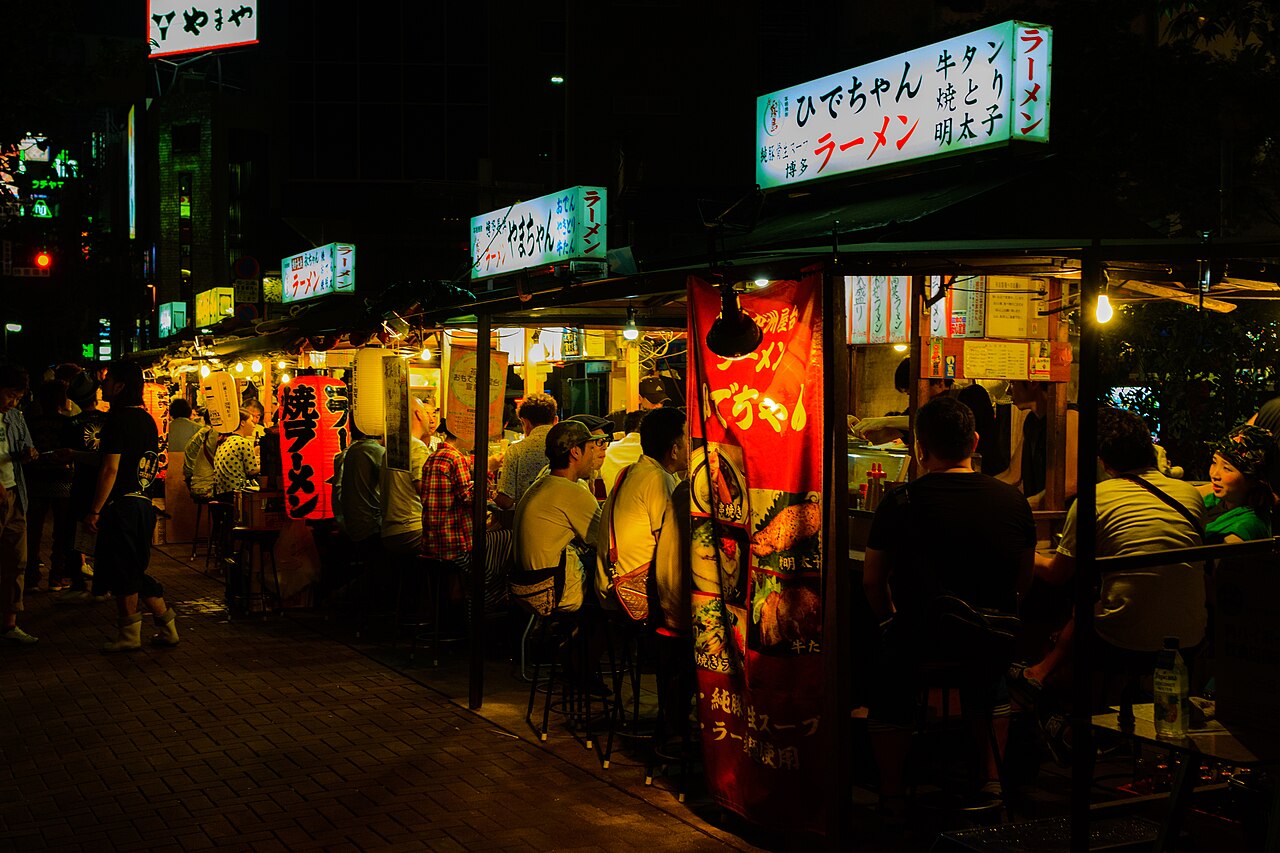
Nakasu is a sandbank island roughly one kilometer long and 200 meters at its widest, wedged between the Naka River and the Hakata River. The entertainment quarter was established there in 1834 as a domain fiscal measure, and it has been Kyushu’s nightlife center ever since.
The scale figures in English guides are inflated by circular citation. A Japanese business piece from Fukuoka Leap Up in October 2024 gives 887 licensed food and beverage establishments employing 4,657 people, against the 2,000 or 3,500 repeated online. The gap is a counting definition, not a factual dispute. The same piece notes Nakasu 4-chome posted Fukuoka’s highest commercial land price rise in the 2024 valuations at 20.7 percent, so the district is not in decline.
What makes Nakasu unusual is the absence of hassle. A walker writing for Sanpoo in February 2025 went in knowing nothing and came out comparing it to the outer edges of Kabukicho, with wide northern streets, converted theater buildings, a bronze statue of three geisha, and storefront display cases showing photographs of hostesses and sushi chefs side by side. He noted a lot of foreign tourists, concentrated around the food stalls.
The reason nobody bothers you is regulatory and recent. Local industry media explained in 2020 that a 2015 amendment to Fukuoka Prefecture’s nuisance ordinance plus an April 2020 regulation on adult entertainment advisory offices, combined with business association cooperation and regular patrols, reduced touting on the main Kokutai-dori stretch to effectively zero. The touting migrated to Hakata and Tenjin stations instead, where it is mostly restaurants.
Foreigner reality: the food stalls and bars are completely open. Hostess clubs are conversation businesses and most will decline customers who cannot hold a conversation in Japanese, with signposted exceptions. Our regional fuzoku guide covers the venue landscape outside Tokyo.
Kawasaki Horinouchi and Minami-cho
Horinouchi is Kanto’s second largest soapland district after Yoshiwara, a few minutes from Kawasaki Station’s east exit and, notably, a few minutes from Kawasaki City Hall. Industry listings put the count at 51 shops in Horinouchi and 13 in Minami-cho as of October 2026.
The live story is enforcement. In November 2025 two soaplands, DOLCE Kawasaki and QUALITY Kawasaki, were raided for providing a place for prostitution and company representatives were arrested. On December 2, 2025, Kanaloco reported the arrest of a 53-year-old Tokyo executive believed to head the wider group. A further Minami-cho shop was raided in January 2026.
A Japanese walker who went through in August 2026 specifically to see the aftermath filmed the named shuttered premises, noting that some carried formal suspension notices and some did not, while the rest of the street carried on apparently unchanged. A separate walk in January 2026, during what is normally the trade’s busiest season, found scattered closed shops already cleared to bare lots.
Foreigner reality: poor, and apparently deliberately so. One Japanese walker who covers the district argued in June 2025 that part of Horinouchi’s appeal to its workers is precisely that foreigner acceptance is low, which they find a more predictable working environment. Treat that as one person’s framing, but it matches the refusal pattern.
Yokohama: Fukutomicho and the Koganecho Story

Koganecho is Japan’s clearest case study in a red light district being deliberately erased, and it is the template everyone else fears.
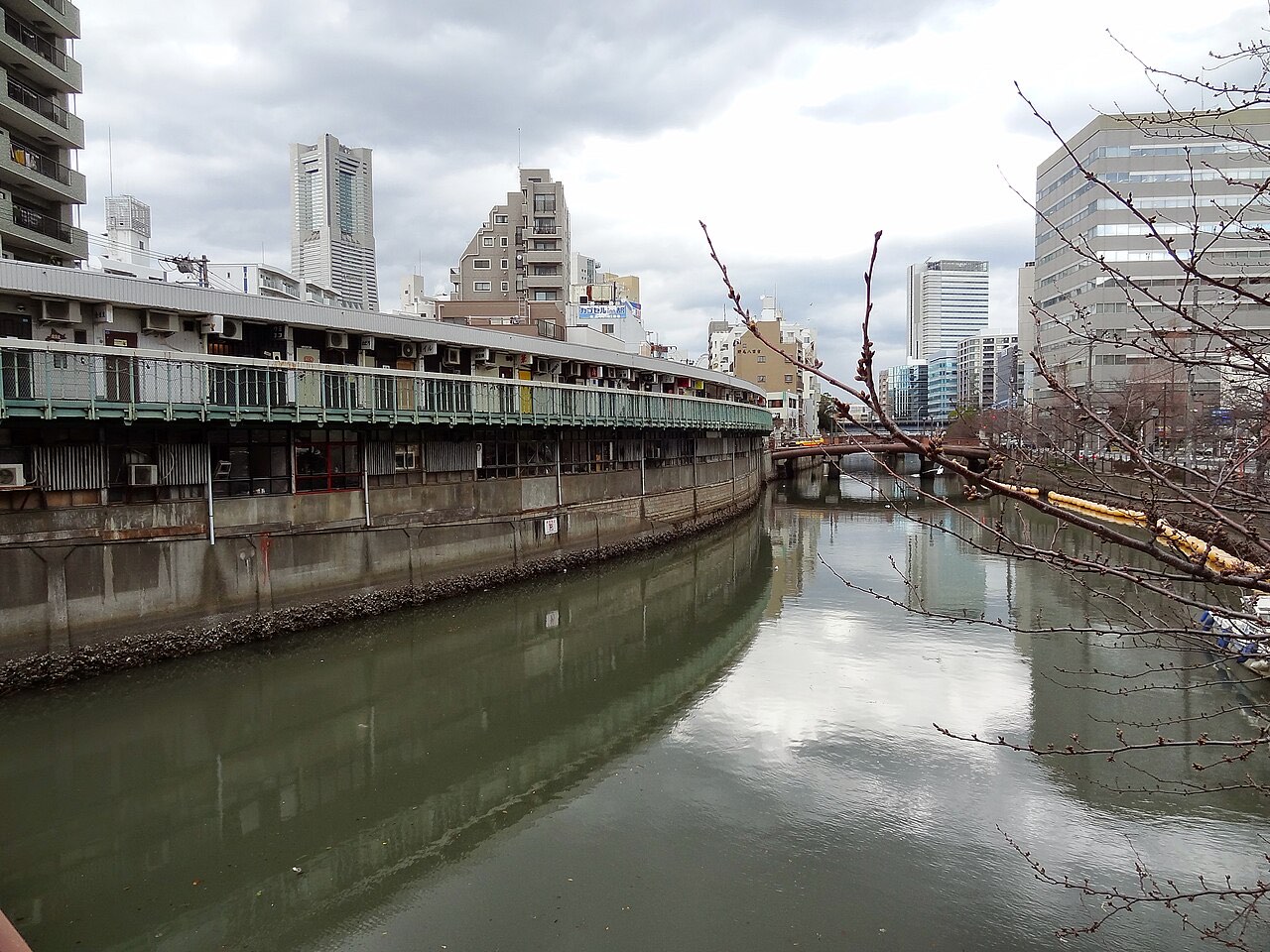
Under the Keikyu railway viaduct, Koganecho had accumulated roughly 250 tiny two-floor premises operating as bars. Kanagawa police put the peak at 257 and estimated the district paid around ¥500 million a year in protection money. On January 11, 2005, police launched the Bye-Bye Operation. The tactic, as Hamarepo describes it, was to seal the district and cut off customer traffic entirely, with armored vehicles ringing the area. It emptied within days. A Kanaloco retrospective records the characteristic shop awnings down to 19 by late 2014, and the city acquiring around 180 vacant storefronts, converting 75 into studios and cultural spaces.
What replaced it is an art district. Tokyo Weekender visited in August 2024 and found galleries, a cafe and timber decking under the tracks, with two studios built into the viaduct arches in 2008 with deliberately large open windows at residents’ request. Population is up 52 percent since 2004.
Do not oversell it. Real Hunter found the viaduct strip quiet with conspicuously many empty storefronts, and notes the architectural tell for a former premises is a dense row of air conditioner units on the facade. A 20-year retrospective on Rakumachi calls the regeneration incomplete.
Nearby Fukutomicho went the other way, not by enforcement but by demographics. Real Hunter documented in August 2022 that as proprietors aged out and shops closed, Korean residents took over the vacant storefronts, and the street now brands itself Koreatown Fukutomicho International Street. The surviving soaplands are grandfathered structures that cannot be replaced once they close, which is exactly why the old buildings are still standing.
Other Districts Worth Knowing
Kanazuen, Gifu. The Chubu region’s largest soapland district, immediately behind JR Gifu Station’s south exit against the elevated rail line. A 4travel walker who arrived at 10am counted about 50 shops in rows and found staff posted at every entrance even at that hour, greeting and simultaneously watching, which limited what he felt able to photograph. The district is shrinking: 69 shops at the 1993 peak, 54 by 2017, and a municipal road was driven straight through the middle of it, opening provisionally in summer 2023.
Nishiki 3-chome, Nagoya. Locally called Kinsan, the largest entertainment quarter in central Japan. A Nagoya writer’s February 2026 account is the most honest description of any district here: a few steps and a tout has you, the neon runs identically on weekdays and weekends, and late at night you watch the ground to avoid what people have left on it. She calls it entertaining trash and clearly loves it. Nagoya’s anti-touting ordinance has covered the area since October 2018, and Aichi Prefecture has an anti-overcharging ordinance naming Sakae and Nishiki 3-chome specifically.
Ogoto Onsen, Shiga. Several dozen large soaplands in one block off Route 161, with facades imitating Western temples, Japanese castles and the undersea Dragon Palace, ringed by rice fields with Lake Biwa behind. A Bunshun feature in February 2024 calls it architecturally without peer in Japan, which is accurate and not a compliment.
For street solicitation specifically, which exists in pockets well beyond Tokyo, see our nationwide overview.
District Comparison
| District | City | Known for | Tourist-friendly | Photography | Main risk |
|---|---|---|---|---|---|
| Kabukicho | Tokyo | Everything, at scale | Yes, with care | Streets yes, venues no | Touts and inflated bills |
| Yoshiwara | Tokyo | Densest soapland cluster | Walk yes, enter maybe | Strongly discouraged | Being refused at the door |
| Tobita Shinchi | Osaka | Ryotei facade, open doorways | No | Banned, enforced | Confrontation over a camera |
| Matsushima Shinchi | Osaka | Same model, less polished | No | Banned | Getting lost, then confronted |
| Susukino | Sapporo | Hokkaido’s nightlife core | Yes | Streets yes | Touts and bill disputes |
| Nakasu | Fukuoka | Riverside stalls and clubs | Yes, easily | Streets yes | Very low |
| Horinouchi | Kawasaki | Kanto’s second soapland hub | No | Discouraged | Language refusal |
| Koganecho | Yokohama | Former quarter, now galleries | Yes | Yes | None worth naming |
| Kanazuen | Gifu | Chubu’s largest soapland row | No | Discouraged | Language refusal |
| Nishiki 3-chome | Nagoya | Central Japan’s biggest quarter | Yes, with care | Streets yes | Overcharging |
Etiquette and Safety Across All of Them
Carry cash and your passport. Many venues are cash only, card surcharges at tout-referred bars are a standard scam, and ID checks are routine. A photocopy is not accepted.
Never follow a tout. This one rule eliminates most of the risk in every district on this page. Licensed venues rarely need to recruit on the street, and touting is illegal in the designated zones of Kabukicho, Susukino, Nakasu and Nishiki. If somebody approaches you, the economics are already against you.
Agree the price before you sit down. Ask for the total including cover, service charge and tax, and ask what the time limit is. A venue that will not answer clearly is telling you something.
Do not photograph people. Tobita Shinchi enforces this aggressively. In Yoshiwara, Kanazuen and Horinouchi it is a strong norm every Japanese walking blogger observes unasked. Street scenes and neon are fine. Doorways, staff and workers never are.
Know where the koban is. Every one of these districts has a police box at the main crossing, and Susukino’s is a local landmark. If a bill turns hostile, walking toward it ends the conversation.
Watch the last train. Tokyo’s network largely stops between midnight and 1am, and the districts that stay open latest are the ones where it costs the most to leave.
Our Tokyo nightlife safety guide goes deeper on all of this.
If You Just Want to Look, Versus If You Want to Go In
These are genuinely different trips and it helps to decide which one you are taking.
If you just want to look, you are doing urban history, and some of these districts reward that enormously. Yoshiwara in the early morning is a legible Edo street plan with a shrine, a moat wall and a deliberate curve in the approach road. Koganecho shows what happens after a district is erased. Nakasu is a pleasant evening by a river. The etiquette is simple: walk, look, keep the phone pocketed near any doorway, and do not linger outside a shop you have no intention of entering. In Tobita Shinchi, your curiosity is a cost the people working there absorb, which is worth weighing before you go.
If you want to go in, the practical constraints matter more than the legal ones. Book ahead at a venue that states a foreigner policy rather than arriving and hoping. Expect cash, and expect Japanese to be the operating language outside a small set of foreigner-facing shops. Our venue directory lists Tokyo venues with language and foreigner-policy fields, which is the shortest route to a booking that will actually be accepted.
The legal line is not where visitors assume. Licensed venues are licensed. Street solicitation is where exposure sits, for both parties, and it is what the Justice Ministry panel spent 2026 recommending penalties for. There is a harsher layer for non-residents: Japan’s immigration act names prostitution and directly connected business in both its denial-of-landing and deportation provisions, and those are administrative powers requiring no criminal conviction. That asymmetry is the real reason to stay inside the licensed system, in every district on this page.