Quick Reference
- Golden Gai: ~200 to 280 bars across six alleys; cover ¥500 – ¥1,500; opens 7 – 8pm
- Budget per bar: ¥2,000 – ¥3,000 (~$14 – $20); a full night ¥8,000 – ¥15,000
- Kabukicho landmarks: Godzilla head, Tokyu Kabukicho Tower, Hanazono Shrine, Omoide Yokocho
- Biggest risk: street touts. 91 reports and ~¥99 million lost in Jan – Jun 2026
- Last trains: roughly 00:00 – 00:40 from Shinjuku depending on line
- Cash: essential. Carry ¥15,000 per person; use 7-Eleven ATMs for foreign cards
Two of Tokyo’s most famous night districts sit about a ten-minute walk apart, on either side of the world’s busiest railway station, and they could not be less alike.
Kabukicho is loud. A grid of towers stacked eight floors deep with bars, clubs, karaoke rooms, cinemas, arcades and adult businesses, wrapped in more illuminated signage per square meter than almost anywhere on earth. It is built to be seen from a distance and to absorb tens of thousands of people at once.
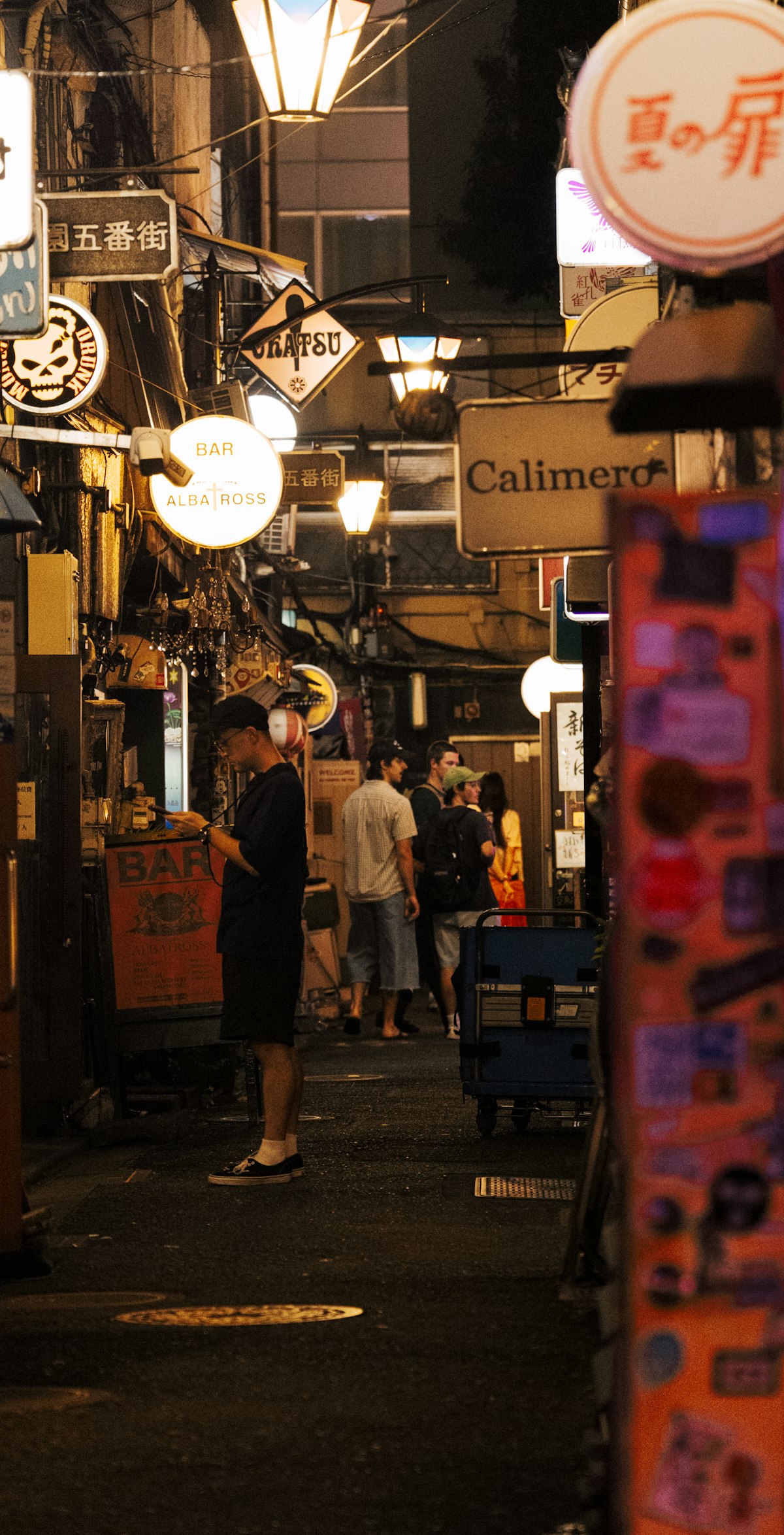
Golden Gai is the opposite. Six alleys of two-story wooden shacks, most holding a bar with four to eight seats, some barely wider than your outstretched arms. It survived the bulldozers that flattened everything around it, and what it offers is not spectacle but proximity: you, the owner, and whoever else is on the stools.
Most first-timers try to do both in one night, and that is the right call. Here is how each actually works, what a night costs, the scams running in 2026, and a timed plan that gets you from dinner to the last train without a single unpleasant surprise.
Orienting Yourself: The Walk from the Station
Shinjuku Station has more than 200 exits and every one of them is the wrong one until you learn three.
East Exit (東口). Your anchor. Come out, and the wall of screens on the Studio Alta corner is in front of you. Turn left, walk north past Yasukuni-dori, and within three minutes the neon closes over your head. That is Kabukicho. Keep going to Central Road, the main artery, with the Godzilla head visible above the rooftops to your left.
Kabukicho to Golden Gai. From the Godzilla head, walk east toward Meiji-dori, roughly five minutes. Golden Gai is a low, dark block on your right just before the big road, hidden from the main street by a modern building line. If you can see Hanazono Shrine’s vermilion torii, you have gone fifty meters too far east and Golden Gai is directly behind you.
Golden Gai to Ni-chome. Cross Yasukuni-dori south and walk about seven minutes to Shinjuku Ni-chome, the densest concentration of gay bars on the planet and, for a lot of visitors, the friendliest drinking in Shinjuku regardless of who they are. We cover it in the Shinjuku Ni-chome guide.
West Exit (西口). The other side of the station, and the reason to use it is Omoide Yokocho, the yakitori alley.
The whole circuit is under twenty minutes of walking, and you are never far from a station, a convenience store or a police box.
Golden Gai: How the Alleys Actually Work
Golden Gai grew out of the postwar black market that sprawled around Shinjuku Station in the late 1940s. Pushed off the main streets, the stalls consolidated here as unlicensed drinking spots, then converted into proper bars after Japan’s 1956 Anti-Prostitution Law came into force. By the 1960s the alleys had become a hangout for writers, filmmakers and artists, which is the reputation that still gets it written about. It nearly died twice, to bubble-era developers and then to plain decline, and survived because the buildings are individually owned by their bartenders and enough of them refused to sell.
Today the count runs somewhere between 200 and 280 bars, depending on who is counting, packed into six parallel alleys and the lanes between them. The buildings are two stories, so a great many bars sit up a staircase closer to a ladder.
The cover charge, explained honestly
Almost every bar charges a seating fee, ¥500 to ¥1,500 per person, usually bundled with a small dish called otoshi (お通し). This is not a scam and it is not aimed at foreigners. A bar with six seats serving eighteen customers a night has to cover central Shinjuku rent somehow.
The rule that matters: the cover should be posted on the door or the menu where you can see it before you sit down. Reputable Golden Gai bars post it. If you cannot find it, ask at the door in English before you take a stool. Any bar that will not answer that question is a bar you should not enter, here or anywhere in Tokyo.
Drinks run ¥500 to ¥1,500. A realistic per-bar spend is ¥2,000 to ¥3,000 for a cover plus two drinks, and three bars lands around ¥8,000 per person.
How to pick a door
Stand in an alley and read the windows for three signals.
English signage or an English menu. Since roughly 2015 a large fraction of Golden Gai bars have deliberately courted overseas visitors, and they advertise it. A chalkboard with prices in English is an open invitation.
A posted price. Cover and drink prices visible from outside means the owner has decided to be straightforward about money.
Empty stools. Six-seat bars fill fast. Walk the alleys once without committing, note which places have space, then double back. Peak crush is 10pm to midnight on weekends.
What you are reading against: signs saying members only, 会員制 (kaiinsei), or a note that the bar is for regulars. Those are not challenges. Walk on without comment.
Bars worth knowing
These are long-running, well-documented rooms with a track record of welcoming visitors. Golden Gai turns over, so treat any specific bar as a starting point rather than a guarantee, and check current hours before you build a night around one.
| Bar | What it is | Rough spend |
|---|---|---|
| Albatross Golden Gai | Three floors, chandelier, one of the roomiest bars in the alleys. Operating since 1997 | ¥2,000 – ¥3,000 |
| Deathmatch in Hell | Horror-themed, six to eight seats, all drinks a flat ¥666, no cover. Opens 8pm | ¥1,000 – ¥2,000 |
| La Jetée | Film bar named for the Chris Marker short, decades of cinema history on the walls | ¥3,000 – ¥4,000 |
| Bar Plastic Model | Vinyl from the 70s through the 90s, unapologetically loud | ¥2,000 – ¥3,000 |
| Kenzo’s Bar | Leopard print, karaoke breaking out unprompted, famously warm to foreigners | ¥2,000 – ¥3,000 |
| The Open Book | Lemon sours and a wall of books you are allowed to read | ¥1,000 – ¥2,000 |
If none of those have a seat, the night is not ruined. The pleasure of Golden Gai is not finding the famous bar. It is walking into a room with no idea what is inside and discovering the owner has spent thirty years collecting Showa-era jazz records.
What to order, and how to behave
Order simply. Highball, beer, shochu, whiskey, lemon sour. A six-seat bar is not a cocktail lab and the owner is also working the register. If there is a house specialty on the board, order that.
Cash is safest. Card acceptance has improved but stays patchy, and the smallest bars remain cash only. Carry ¥10,000 in mixed notes.
One drink minimum is understood everywhere, and two drinks then moving on is completely normal. The point of Golden Gai is breadth, not loyalty. Keep your voice at the level of the room, because these are wooden buildings with paper-thin walls and people living upstairs. Do not bring a large group: four is the maximum that works, two is ideal, and solo is genuinely the best way to do it. Our solo traveler guide to Tokyo covers why the city rewards going alone.
Photography
Outside in the alleys photos are broadly fine and everyone takes them, but individual bars post no-photo signs covering their own frontage and some owners will come out. Respect the sign.
Inside, ask first, every time, and be prepared for no. Never photograph other customers, including the back of their heads. A Golden Gai bar is somebody’s living room that happens to sell whiskey.
Kabukicho: The Sights Before the Sin
Kabukicho gets described as a red-light district, which is true and also misleading. It is Japan’s largest entertainment district full stop, and the majority of what is in it is entirely mainstream.
The Godzilla head. An 80-ton, roughly 12-meter head modeled on the 1992 film design, mounted on the eighth-floor terrace of the Shinjuku Toho Building since 2015. It roars and lights up on the hour from noon to 8pm. Hotel Gracery occupies the tower above and Toho Cinemas fills the lower floors, anchoring the street now called Godzilla Road. It is the best orientation landmark in the district.
Tokyu Kabukicho Tower. Opened April 2023, 48 stories, 225 meters, and the biggest change to the skyline here in decades. The second floor holds Shinjuku Kabuki Hall, a food hall styled as a yokocho alley with around ten regional counters running from Hokkaido to Okinawa plus Korean. The third floor is namco TOKYO, a neon-drenched arcade with a food and drink lounge attached. Higher up sit live music venues, a cinema and two hotels. It is the easiest and most transparently priced place to eat and drink in Kabukicho, which makes it a sensible first stop if you are nervous.
Hanazono Shrine. A Shinto shrine that predates the whole district, immediately east of Golden Gai. Open air, walkable all night, and completely silent thirty seconds after you leave the neon. The contrast is the point. Antiques flea market most Sundays, and the Tori-no-ichi festival in November.
Omoide Yokocho. On the west side of the station rather than in Kabukicho, but it belongs in the same night. Around eighty tiny yakitori counters jammed into two smoky lanes, open roughly 4pm to midnight. Skewers ¥100 to ¥200, draft beer ¥500 to ¥600, a full dinner with drinks ¥2,000 to ¥3,000, plus a ¥300 to ¥500 otoshi at some shops. Counter seating only, four to eight stools, shoulder to shoulder with strangers. The nickname Piss Alley is a relic of the days before the lane had plumbing and locals mostly do not use it. Go at 5pm to walk straight in, or 7pm for atmosphere and a wait.
Arcades, karaoke and the batting center. A Don Quijote open essentially around the clock, Karaoke Kan and Big Echo branches at a few hundred yen per person per half hour before drinks, and the Oslo Batting Center, a multi-story cage complex where you can hit baseballs at midnight for pocket change. These are what regulars actually do and tourists mostly miss.
Robot Restaurant is gone. It closed in March 2020 and did not come back. The same operators opened Samurai Restaurant in the old premises in late 2023, a similar high-energy dinner show, over-18s only because of the building it occupies. If a blog or a tout tells you Robot Restaurant is running, that source is out of date.
The Adult Side, Clearly Labeled
Kabukicho’s adult entertainment is real, large, legal and regulated, and it occupies specific buildings on specific streets rather than spilling onto you. You can walk past all of it for hours and never be in it. Each category gets its own guide on this site, so here is only the map.
Host clubs. Male hosts, female customers, and the district’s most-discussed business after Japan amended the Businesses Affecting Public Morals Regulation Act in 2025 to break the debt-and-romance pipeline. The visible result is that the giant billboards announcing a host’s annual sales and ranking are gone. What changed and what did not is in the host club crackdown, one year on.
Hostess clubs (kyabakura). The mirror image: female staff, male customers, conversation and poured drinks, a set charge by the hour plus service. Some venues here are genuinely set up for English speakers. The pricing structure is where people get hurt, and the Tokyo hostess club guide breaks it down.
Girls bars. Cheaper and simpler: a bartender rather than a companion, a counter rather than a table, an hourly charge rather than a set. Tokyo police spent 2026 raiding a number of these for operating outside their licenses. See the girls bar guide.
Licensed fuzoku. The regulated adult services industry, with its own categories, etiquette and widely varying attitude toward non-Japanese customers. Start with our complete guide to Japan’s adult entertainment, and find specific foreigner-friendly venues in the store directory.
One hard rule covers all of it: never enter any of these through a person who approached you on the street.
Scams, Touts and Okubo Park
Kabukicho’s physical safety record is genuinely good. The financial one is not, and the numbers are specific.
Between January and June 2026, Tokyo police received 91 reports from people, many of them overseas visitors, who followed street touts into bars and were then charged catastrophically. Total reported losses came to roughly ¥99 million, about $670,000. That is an average north of a million yen per incident. In July 2026 police arrested a 53-year-old man under the metropolitan anti-nuisance ordinance for soliciting pedestrians in Kabukicho 1-chome, and issued a public warning to foreign visitors at the same time.
How the tout scam runs
A friendly man speaking decent English approaches you near Central Road, Godzilla Road or the lanes around Golden Gai. He is warm, low pressure, and has a specific recommendation: a bar with cheap drinks, a club with no cover, a place his friend owns. He walks you there, sometimes several blocks and up an elevator.
Then one of two things happens. Either the bill arrives at ten to twenty times what you were told, padded with table service, per-person-per-hour seating and drinks for staff you did not order, and the door is blocked until you pay. Or, worse, your drink is spiked, you lose several hours, and your card runs up charges while you are unable to object. The UK Foreign Office has issued a drink-spiking and card-fraud warning naming Kabukicho, Roppongi, Shibuya and Ikebukuro, and Japanese police have flagged the same four districts.
Touting has been illegal in Tokyo since 2005. Police have pushed the barkers off the main drag and have been making arrests nightly through 2026, with the metropolitan force standing up a dedicated unit aimed at the organized crime group behind much of it. The touts moved into the side streets, including the approaches to Golden Gai. Enforcement also targets the venues, under an anti-bottakuri ordinance that lets authorities fine businesses for accepting customers delivered by a tout.
The three rules that make you immune
Never follow anyone who approached you. Not for a bar, not for a club, not for a show, not because he seems nice. Police guidance is literally to ignore them and keep walking. No legitimate Kabukicho business needs to recruit you off the sidewalk.
Only enter places you chose yourself, from a map, a guide, a review, or a door you liked the look of.
Check that prices are posted before you sit. Cover, hourly charge, service percentage. If any of it is vague, leave. Leaving is free. Sitting down is not.
Okubo Park
The small park at Kabukicho’s northern edge, behind the hotel cluster, has for several years been Tokyo’s most visible street solicitation spot, with a well-documented connection to host club debt. It is heavily policed and periodically cleared. Tourists do not get hurt there, but it is also not a sight and the people in it are not performing for you. Photography is a genuinely bad idea. Walk around it.
If you have already been overcharged
Do not pay a bill you believe is fraudulent under pressure if you can avoid it. Say clearly that you want to go to the police. There are koban (交番, police boxes) around the Kabukicho perimeter and the staff are used to this exact complaint.
If you paid by card, dispute it with your bank the same night while the timestamp is fresh, and keep the receipt. If you paid cash you can still file a report, which is how the 91-case figure above exists at all. Our Tokyo nightlife safety guide walks through the reporting process and the phrases.
A First Night, Hour by Hour
This is a route that works, assumes no reservations, and gets you home on a train.
18:00 – Omoide Yokocho, west side. Out the West Exit, into the yakitori lanes before the queue forms. Six skewers, two beers, about ¥2,500. You are eating first on purpose, because everything that goes wrong in Kabukicho goes wrong faster on an empty stomach.
19:15 – Cross east and walk Kabukicho. Godzilla Road, with the head roaring at 20:00 if you time it, then Central Road or a loop through Tokyu Kabukicho Tower if the weather is bad. This is your acclimatization lap. Look, enter nothing, say no to everyone who talks to you.
20:00 – Arcade or batting cage, one hour. namco TOKYO in the Tokyu tower, or the Oslo Batting Center. Roughly ¥1,000 to ¥2,000, and the most fun thing in the district that nobody writes about.
21:00 – Hanazono Shrine, ten minutes. Stand in the dark under the torii with the neon glowing behind you. Then turn around, because Golden Gai is fifty meters west.
21:15 – Golden Gai, bar one. Pick a door with posted prices and a free stool. Cover plus two drinks, about ¥2,500. Talk to the owner.
22:30 – Golden Gai, bar two. Different alley, different vibe, another ¥2,500.
23:45 – Bar three, or start walking. Check your specific last train now, not at 00:20.
00:15 – Move. Golden Gai to the Shinjuku ticket gates is about ten minutes on foot, longer when the sidewalks are full, which at that hour they are.
Total: roughly ¥9,000 to ¥12,000 per person, about $60 to $80.
Last trains
Last services out of Shinjuku broadly fall between midnight and 00:40, varying by line, direction and day. As a rough guide the JR Yamanote Line runs until about 00:30, the Chuo Line Rapid until about 00:20, and the Tokyo Metro Marunouchi Line until about 00:15. Those are approximations that shift, so look up your actual last train in the app before your second drink. Nothing runs between roughly 01:00 and 05:00, and Tokyo has no night service at all.
If you miss it
Taxi. Plentiful all night at the East Exit rank. Shinjuku to Shibuya runs roughly ¥2,000 to ¥2,500 at daytime rates and Shinjuku to Roppongi roughly ¥2,200 to ¥2,800, with a 20 percent late-night surcharge from 22:00 to 05:00. Cards work in almost every Tokyo taxi.
Manga cafe. Night packs at chains like Kaikatsu Club, Manboo and Media Cafe Popeye run roughly ¥1,500 to ¥3,500 for six to twelve hours in a private booth with a reclining chair or flat mat, free soft drinks, showers at many branches, and more manga than you will read. Shinjuku branches sit at the top of that range. Bring your passport, because ID is required and rules for foreign visitors vary by chain.
Love hotel. Not only for couples, and often the most comfortable option for two people. A few hours of rest or a stay until morning typically beats a business hotel on price and comfort, and Shinjuku has a dense cluster on the Okubo side. The rooms, the selection panels and the etiquette are in the Tokyo love hotel guide.
Karaoke or a 24-hour chain. A karaoke room until 5am is cheap and warm. So is a Matsuya, a Yoshinoya, or the round-the-clock Don Quijote if you simply need to not be outside.
What a Night Costs
Ranges are per person and reflect 2026 street prices. Dollar figures assume roughly ¥150 to the dollar.
| Item | Cost | Notes |
|---|---|---|
| Omoide Yokocho dinner | ¥2,000 – ¥3,000 | Skewers ¥100 – ¥200; beer ¥500 – ¥600; otoshi ¥300 – ¥500 |
| Golden Gai, per bar | ¥2,000 – ¥3,000 | Cover ¥500 – ¥1,500 plus drinks ¥500 – ¥1,500 |
| Golden Gai, 2 hours in one bar | ¥3,000 – ¥5,000 | If you settle in rather than hop |
| Arcade or batting center | ¥1,000 – ¥2,000 | Per hour, roughly |
| Karaoke | ¥500 – ¥2,000 | Per person per hour, higher after midnight, drinks extra |
| Taxi to Shibuya or Roppongi | ¥2,000 – ¥2,800 | Plus 20% surcharge 22:00 – 05:00 |
| Manga cafe night pack | ¥1,500 – ¥3,500 | 6 – 12 hours; Shinjuku at the top of the range |
| Realistic full night | ¥8,000 – ¥15,000 | ~$55 – $100 |
Carry ¥15,000 per person in cash, because Golden Gai and Omoide Yokocho are largely cash and the small places that do take cards sometimes add a surcharge. Foreign cards work reliably at 7-Eleven and Japan Post ATMs, and Kabukicho has a 7-Eleven on most blocks. Bank ATMs frequently reject overseas cards and many close overnight.
Carry your passport. Some bars check, most adult venues check, and a photocopy is routinely refused.
On tattoos: Golden Gai does not care, and neither do Kabukicho’s bars, arcades or restaurants. The policies you will run into apply to public baths, gyms, pools and some adult venues, not to drinking.
The Honest Summary
Golden Gai is a bar district where the bars are the size of a walk-in closet and the owner will remember you. Kabukicho is an entertainment machine with a genuinely predatory fringe attached. Both are worth your night, and the difference between a great one and an expensive story comes down almost entirely to whether you let a stranger choose your venue.
Pick your own doors. Read the price before you sit. Check the last train before the second drink. Everything else takes care of itself.