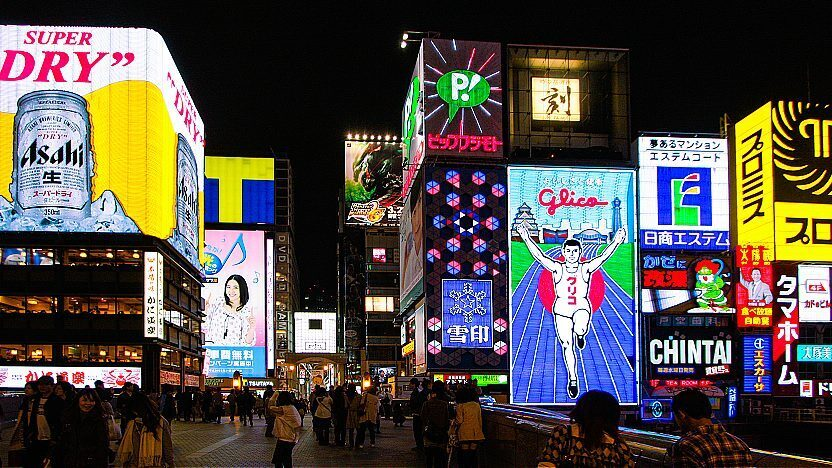
Kabukicho fills a rectangle of blocks north of Shinjuku Station, and for most of the past seventy years it has absorbed whatever Tokyo's nightlife economy pushed toward it. In the first half of 2026, Tokyo Metropolitan Police arrested 40 women in the streets around Okubo Park for violating the Prostitution Prevention Law. Three were teenagers and one was a 16-year-old high school student. That figure is down 35 on the same period in 2025, and the district it describes is not the one that went viral three years ago.
This article used to read as a location guide, with addresses, peak hours, and pricing. It no longer does, and it should not. What follows instead is the part that is actually worth understanding: why this particular few hundred meters of Tokyo produced a street scene at all, what the authorities have tried since 2004, what changed between 2023 and 2026, and why a visitor in 2026 has every reason to stay out of it. Our companion piece on the Kabukicho street scene, the arrests, and the risk goes deeper on the enforcement record and the documented harm to customers.
The Word, and What It Excludes
Tachinbo (立ちんぼ) is built from tachi (立ち), meaning standing, and it describes exactly that: someone standing and waiting. In practice it means a woman soliciting on the street rather than through a business. The distinction from fuzoku (風俗), Japan's licensed adult entertainment sector, is the whole point. A fuzoku operator files a notification with the prefectural public safety commission, works from fixed premises, publishes a price list, and has a commercial interest in health measures and in not employing minors. None of that applies on a sidewalk.
Japan's 1956 statute is unusual in what it targets. It does not criminalize the sale of sex itself. It criminalizes public solicitation, brokering, procuring, and providing premises, with solicitation carrying up to six months of imprisonment or a fine of up to 20,000 yen. A negotiation on a Kabukicho street is public solicitation by definition. Our explainer on whether prostitution is legal in Japan works through how that line is drawn.
Why This Happened in Kabukicho and Nowhere Else
The district is bounded by Yasukuni-dori to the south, Meiji-dori to the east, and Shokuanbashi-dori to the north, with the western edge dissolving into Shinjuku's office and retail core. It splits into two halves that behave completely differently. Kabukicho 1-chome, the southern half nearest the station, is the bright part: Ichibangai's neon arch, the Godzilla head on the Toho building, Kabukicho Tower, restaurants, cinemas, and the crowds that feed them. Kabukicho 2-chome, the northern half, is where Tokyo's densest cluster of love hotels sits, and Okubo Park sits in the middle of it.

That adjacency explains most of what followed. Shinjuku Station moves several million passengers a day and empties them a five minute walk from the district's southern edge. Last trains go around midnight, stranding a large population there until roughly five in the morning. The park is public ground, ringed by accommodation, inside a district already saturated with nightlife. No other Tokyo neighborhood combines those four things at the same intensity.
History compounds it. Kabukicho was rebuilt after the 1945 firebombing as a planned entertainment quarter, named for a kabuki theater that was never actually built there, and from the 1960s onward it accumulated bars, cinemas, host clubs, the full range of licensed adult businesses, and an organized crime presence that has never entirely left. The street trade is an old layer of that, predating the current attention by decades.
2004: The Cleanup That Set the Template
The single largest intervention in the district's modern history was the Kabukicho Cleansing Operation (歌舞伎町浄化作戦), launched under then governor Ishihara Shintaro. It made street barking outright illegal in 2005, shut down close to 200 sex businesses, produced more than a thousand arrests of foreign residents, blanketed the district in security cameras, and tightened the ordinances that still govern it.
It worked, in the sense that Kabukicho today is far more surveilled and far less openly lawless than it was in the 1990s. It also set the pattern every later crackdown has repeated. The trade did not vanish. It adapted, moved indoors, moved online, and moved to adjacent wards. The 2026 campaign is producing the same shape of result.
A narrower measure followed in September 2013, when Shinjuku Ward banned street soliciting for bars, clubs, and karaoke boxes. It carried no penalties, only administrative guidance, and touts ignored it. That gap is why the effective tool against touting today is the Tokyo metropolitan anti-nuisance ordinance, which does carry penalties, rather than the ward rule.
2023 to 2026: The Timeline That Matters
The current phase begins in 2023. Tokyu Kabukicho Tower opened that April, pouring mainstream foot traffic into the north of the district. At almost the same moment, a run of YouTube videos filmed at Okubo Park went viral, and a local phenomenon became an internationally recognized location. Inbound tourism was recovering, the yen was weak, and visitors arrived with an address they had seen on a screen. Onlookers, camera crews, and buyers all turned up together.

Authorities responded in stages. In October 2024, Tokyo Metropolitan Police, the Tokyo Metropolitan Government, and Shinjuku Ward began joint patrols around Okubo Park and the neighboring love hotel row, with sweeps planned roughly weekly and an explicit welfare component aimed at connecting women to support services. Police described the situation at the time as worsening, with curious onlookers getting into confrontations with the women waiting there.
The arrest figures tell the rest. Tokyo police arrested 75 women in the streets around the park in the first half of 2025, more than double the previous year, and 112 across the full year. The first half of 2026 produced 40, a drop of 35. Police read that as pressure working rather than as the scene disappearing, and investigators noted that women were still arriving after learning about the park through social media.
Enforcement widened in 2026 beyond the women themselves. Insiders describe a quiet crackdown on touts and scouts running at two or three arrests a day, and the Metropolitan Police Department established a Special Countermeasures Headquarters aimed for the first time at one organized crime group, the Sumiyoshi-kai's Kohei-ikka faction. Scouts, the recruiters who steer young women into sex work, feed the scene directly and are now a named target.
By September 2026, reporting from the district described the visible core of the scene relocating off the park perimeter into the love hotel alleys nearby. One worker gave the reason plainly, saying the move was to avoid having faces exposed on social media by streamers, and that there were fewer thrill seekers and casual onlookers in the alleys. Displacement, again, rather than elimination.
The Tout Problem Is the One That Actually Reaches Tourists
For the overwhelming majority of foreign visitors, the real Kabukicho hazard has nothing to do with the street trade. It is touting. Between January and June 2026, Shinjuku police received 91 reports from people who followed a tout and were then hit with hidden fees, inflated prices, or excessive charges at the destination venue. Reported losses came to roughly 99 million yen, and many of the victims were overseas visitors.
On July 9, 2026, police arrested a 53-year-old Nigerian national in Kabukicho 1-chome for violating the Tokyo anti-nuisance ordinance, allegedly approaching pedestrians with lines such as "Don't be scared, I love you" while soliciting for bars and restaurants. Investigators believe he was part of an organized group of touts working the area nightly. The police advice to visitors is simple and worth following: ignore street solicitations and choose venues yourself, in advance, from a trusted source.
Host Clubs and the Money Behind the Scene
Ask why women keep arriving despite the arrest numbers and the answer is mostly financial, and mostly traceable to one part of Kabukicho. Of the 40 women arrested around Okubo Park in the first half of 2026, 18 told police they were funding visits to host clubs. The mechanism is well documented: a host cultivates a regular customer, encourages spending far beyond her means, extends informal credit, and then presses for repayment.
Japan tightened host club regulation in 2025 specifically to break that cycle, targeting cultivated debt and coercive collection. Whether it works is still open, but the causal link is no longer disputed by anyone, police included. Our coverage of the host club crackdown sets out what the new rules require. The practical implication for a visitor is unflattering: a significant share of money spent on the street does not stay with the person who receives it.
The 2026 Legal Shift
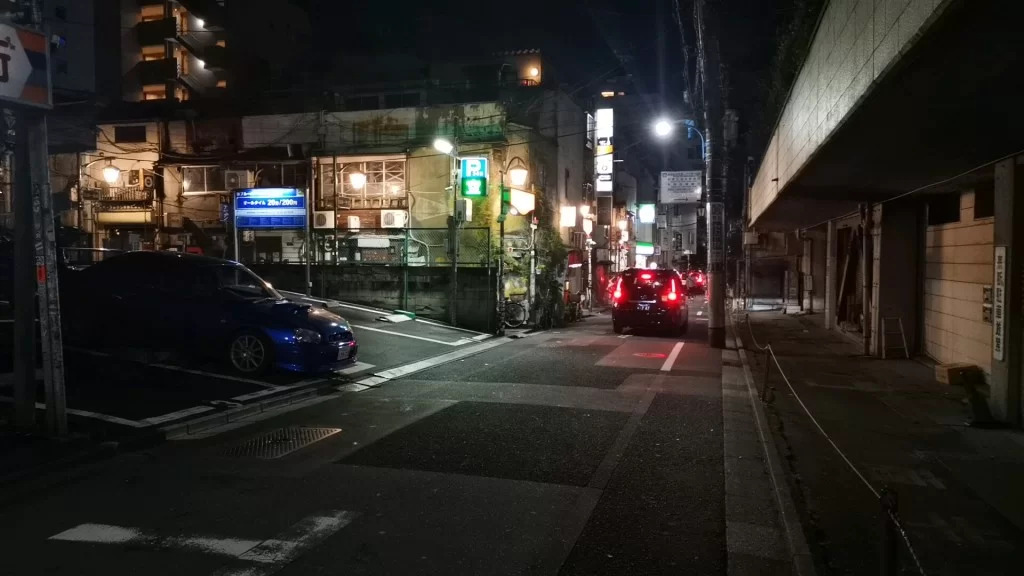
The most consequential development of 2026 is legislative rather than operational. A Justice Ministry expert panel convened in March 2026 and finalized its report on September 17, 2026. It recommended penalizing buyers who solicit prostitution, explicitly including negotiation in public places and online, and including the act of loitering in an area in order to browse. The panel declined to decriminalize selling and declined to widen the statutory definition of prostitution.
Nothing has been enacted. The recommendation still has to pass through drafting and the Diet, and the timetable is not set. But read the language against the geography described in this article and the target is unmistakable. Walking a loop around Okubo Park to look at who is standing there is the conduct the panel named. Today it carries no penalty for the buyer. The state has formally proposed that it should. We cover the proposal in detail in our piece on the 2026 plan to penalize sex buyers.
Layered on top of that, and independent of it, is immigration. The Immigration Control and Refugee Recognition Act lists having engaged in prostitution, or a business directly connected to it, among the grounds for denial of landing under Article 5 and among the deportation grounds under Article 24. Those are administrative provisions. They do not require a conviction to bite, and a deportation carries a re-entry bar measured in years.
What Kabukicho Is Actually Good For
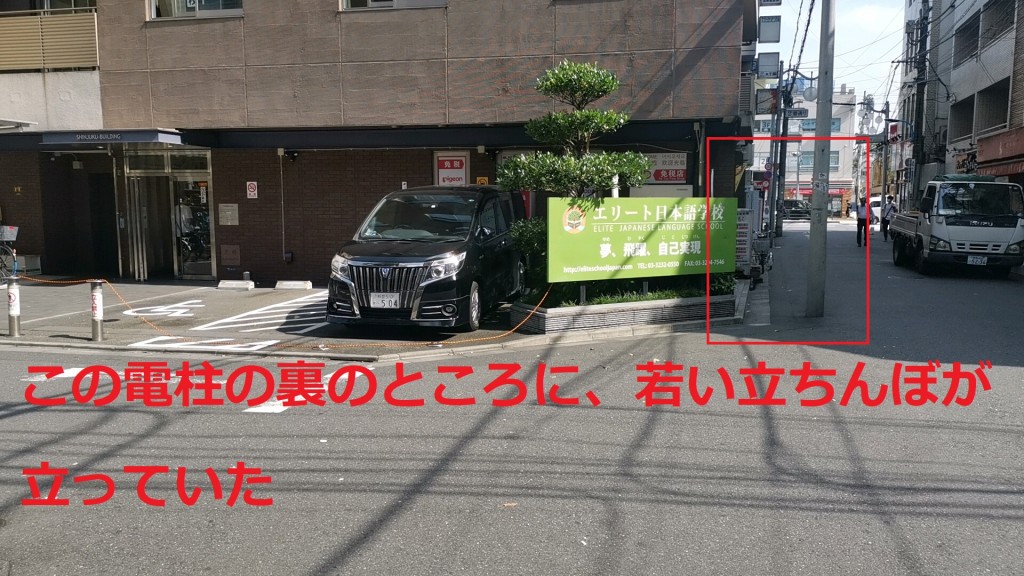
None of the above is a reason to skip Shinjuku. Kabukicho is the most concentrated nightlife district in Japan and the great majority of it is ordinary, legal, and welcoming. Golden Gai's six alleys of tiny bars sit on the eastern edge, Omoide Yokocho's grilled skewers are a few minutes south across Yasukuni-dori, and Kabukicho Tower stacks a cinema, live venues, a food hall, and a hotel into one building. Our first-timer's guide to Golden Gai and Kabukicho covers which bars take walk-in foreign visitors and how the seat charges work.
Getting there is straightforward. From JR Shinjuku Station's East Exit, walk north across the plaza and over Yasukuni-dori, and you are at the Ichibangai arch in about five minutes. Seibu Shinjuku Station sits directly on the district's eastern edge, and Tokyo Metro Shinjuku-sanchome Station Exit E1 is a short walk from Golden Gai.
If adult entertainment is what you came for, use the licensed sector, which is legal for the customer and priced in the open. Delivery health sends a worker to your hotel room at a published rate, soaplands operate from notified premises in Kabukicho and Yoshiwara, pink salons are the budget end, and fashion health sits in between. Our venue directory lists Tokyo establishments with services, languages, and foreigner policy, and the fuzoku guide explains how the categories differ.
If Something Goes Wrong
If you are the victim of theft, assault, or extortion in Shinjuku, report it. Victims have legal protection in Japan regardless of how the incident started, and your embassy can help. A police box sits near the Kabukicho entrance off Yasukuni-dori.
Police: 110 (interpreter connection available)
Ambulance and Fire: 119
Tokyo Metropolitan Police English Helpline: 03-3501-0110
TELL Lifeline (English counseling): 03-5774-0992
Essential Japanese Phrases
The short version: Kabukicho's street scene is a child protection problem and a debt collection problem that has spent three years being mistaken for a tourist attraction. Twenty years of enforcement have moved it around the district rather than ended it, and in 2026 the government has formally proposed making the buyer's side of it a crime. Shinjuku has an enormous amount to offer after dark. This is not the part.